

继2021年国庆假期之后,虎年春节纯电动汽车出行再现补能难题,有不少车主通过社交媒体发文抱怨在离家还有2、300公里时,还要排队数小时充电才能继续行驶。据乘联会预计,2022年新能源汽车销量可突破600万辆,据此估计2022年国内新能源车保有量有望超1400万辆,按现有占比计算的话,纯电动汽车保有量将有可能突破1000万辆大关。随着国内纯电动车型保有量逐年大幅提升,在电池核心技术突破尚待时日的情况下,现阶段纯电动汽车补能焦虑,特别是长途补能焦虑将成为新能源汽车发展的主要矛盾。
一、发展路径不同 超充与换电各具潜力
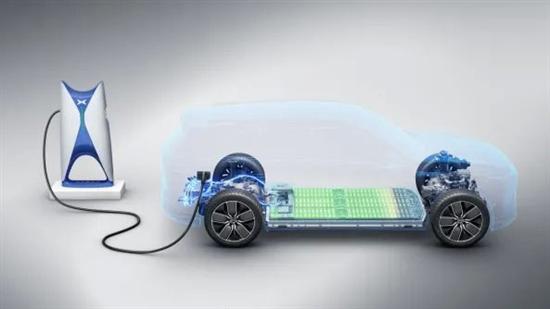 小鹏800V高压SiC平台+480kW高压超充
事实上,国家从政策层面一直在积极推动解决纯电动车的补能问题。2020年“两会”期间,充电设施作为七大“新基建”之一首次被写入2020年政府工作报告。而在2021年的政府工作报告中,明确提出要增加充电桩、换电站等设施。2021年以来,相关政策不断推出,2022年1月,国家发展改革委、国家能源局等多部门联合印发了《国家发展改革委等部门关于进一步提升电动汽车充电基础设施服务保障能力的实施意见》,明确提出要充分发挥动力电池的储能特性,探索推广有序充电、V2G等形式,实现电动汽车与电网的协同互动。在矿场、港口、城市转运等场景因地制宜推广换电模式。同时还提出,要对公共充电桩建设给予财政支持。
庞大的补能需求催生出巨大的市场空间。有机构预测,2021-2025年充电桩有超过5倍的增长空间,而换电站的增长空间或将超过20倍。面对补能市场这块大蛋糕,包括汽车企业、上游电池供应商在内的各方势力竞相布局,但发展的技术路径却是不尽相同。其中,以小鹏、广汽埃安、岚图等车企更看好高压超充技术,在积极布局研发超充技术平台,并推出支持超充技术的新车。以小鹏为例,2021年发布了800V碳化硅平台和480kW高压超充桩等多项技术,并积极在充电站领域布局,目前已成为行业首个贯通全国337城的充电车企,全面覆盖333个地级市和4个直辖市,累计上线品牌超充站813座。而广汽埃安和岚图也在2021年先后发布了超倍速电池技术和自研的800V高电压平台和超级快充技术。
而传统车企的布局则更早,大众中国CEO冯思翰早前就曾表示,换电模式由于成本高昂,想要发展的难度会很大。相比之下,大众中国似乎更看好超充模式,早在2019便与一汽集团、星星充电和江淮汽车成立合资公司——开迈斯新能源科技有限公司,目前该公司已成为国内充电桩(站)头部企业。截止到2021年,开迈斯已在全国80座城市上线超过600座超级充电站,充电终端超6000个,并自主研发了新一代HPC大功率充电技术,最高输出电压1000V。
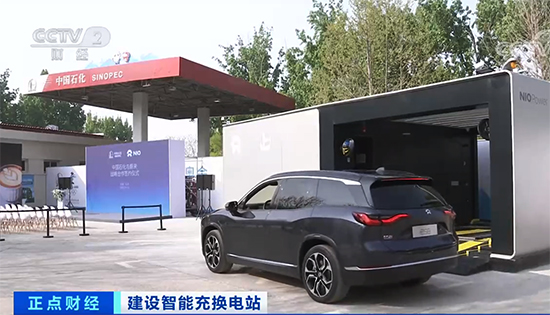 中国石化与蔚来合作的首个换电站
相较超充发展模式,换电模式虽然对于私家车主在用车成本上缺乏优势,但可以大幅缩短补能时间,提升车主的用车体验,同时也有助于缓解电池衰减、车辆保值率变动大等问题,在营运车辆和高端乘用车领域已具备竞争优势。得到了以国家电投、中石化为代表的国家队以及电池供应商等上游企业的青睐。其中,中国石化和国家电投这两大“国家队”在2021年动作频频。2021年4月,中国石化分别与奥动新能源、蔚来汽车签署协议,建立战略合作关系,同期中国石化与蔚来汽车合作建设的全球首座全智能换电站也投入运营。中石化集团公司董事长、党组书记张玉卓表示,在“十四五”期间,中国石化将规划布局5000座充换电站。而国家电投则计划到2025年新增总投资规模1150亿,推广重卡20万台,新增投资持有换电站4000座。不可否认的是,“国家队”的入局无疑将会推动换电产业快速向前发展。
更为重磅的是,国内动力电池龙头企业宁德时代也宣布进军换电市场,并于2022年1月由其旗下全资子公司时代电服发布了换电服务品牌VOGO(乐行换电),首批将选择10个城市开启换电站布局。上游供应商企业的加入,无疑对于整个换电产业将产生巨大影响,特别是在解决电池标准不统一等困扰换电模式发展的问题上,或将起到积极推动作用。
二、解决补能痛点 现阶段超充与换电都不完美
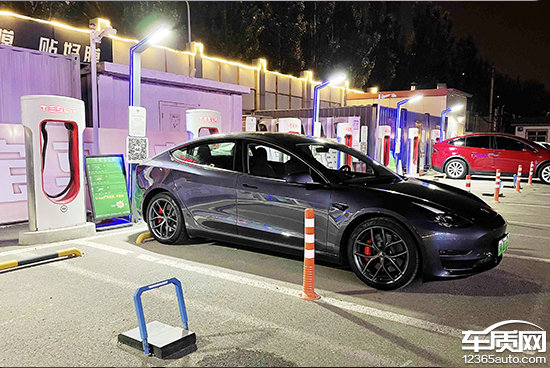 特斯拉超充站
就现阶段发展而言,超充和换电都可以帮助用户实现高效补能,两者各自的优势突出,但同样也都存在一些弊端,亟待解决。
就超充而言,特别是品牌超充桩,各大车企都在积极进行投放,目前在城市内的布局日趋完善,但在高速路网上的布局进展相对有些缓慢。据国家发改委最新披露数据显示,目前我国高速公路充电桩1.38万个(包含快充和超充),主要集中在京津冀鲁、长三角、珠三角等区域,尚未实现全覆盖。在“车远多于桩”的情况下,节假日高速公路充电排队长问题日益凸显。今年虎年春节,高速补能问题再次重现,有车主在微信朋友圈发文称,在离家还有250公里时,还得排队3小时充电。
与充电桩数量少相比,快充/超充在日常使用中同样存在问题。据车主董先生向车质网反馈,其购买的豪华品牌纯电动车,在跑高速过程中,连续3个充电站的快充桩都无法正常使用,充电功率只有7-12KW。同时还有部分车主反馈,购买的自主品牌纯电动车,使用快充时充电时间过长,与购买时的宣传不符,严重影响了使用体验。
此外,超充在应用层面同样存在一些问题,最值得关注的便是对城市电网的冲击。随着超充桩布局加快,对于所在区域的电网用电负荷势必要越来越大,尽管国家电网每年也会对线路进行扩容改造,但速度难以跟得上充电站对于能源的需求,特别是充电高峰期,多辆车一起使用超充,充电效率也会有所下降。
而在补能效率上,超充模式也并不完美,与换电相比还是存在一定差距。对此,车质网曾做过相关测试,以特斯拉V2超充桩为例,不考虑排队的情况,Model 3(配置|询价)电量18%充到60%用时29分钟,增加续航里程256km。而蔚来的二代换电站,不考虑排队的情况下,为一辆车更换一块满电电池大概需要5分半钟。从时间上来看,两者的补能效率高下立判。
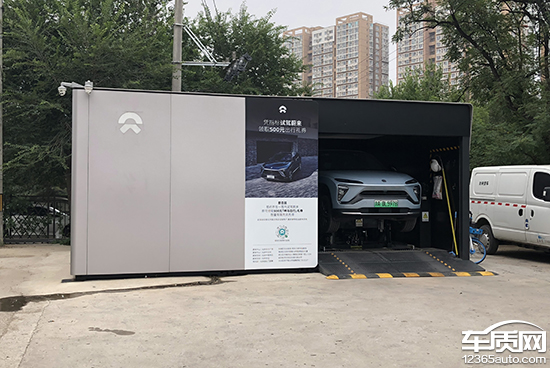 蔚来换电站
蔚来换电站
与快充超充相比,近年来才发展起来的换电站同样也面临不少问题,其中最突出的就是在城市内的网点少。对于城市通勤的车主来说,换电虽然更为便捷,但由于城市内的换电站数量偏少,导致会出现排队时间远远大于换电时间。有车主反馈,在北京某新势力品牌换电站,排队近1个小时,而换电所需时间只有不到6分钟。这还是在北京这样的大城市,对于地方城市而言,换电难度可想而知。
而在车主关心的使用成本方面,换电站现阶段的表现也不完美,换电模式虽然方便,但车主花费的成本相较快充和超充要偏高一些。以某新势力品牌为例,对于首任车主,在保留家用充电桩的前提下每个月可以享受4次免费换电权益,超过以后将收取充电费和服务费。对此有车主进行过体验,算上电费和服务费,经过折算相当于1.7元/度,而某品牌超充的收费标准是1.35元/度,同样包含了电费和服务费。
从投资角度来看,换电模式投入成本高、回报周期长等已形成业内共识。据移动能源服务商协鑫能科披露的数据显示,其单个乘用车换电站仅建设成本就高达500 万元,投资回收期大概在5.21 年。而作为换电行业“独角兽”的奥动新能源虽然备受资本青睐,刚刚在去年9月份完成15亿元的B轮战略融资,但从其2018-2020年营收情况来看,净利润分别为-1.86 亿元、-1.62 亿元和 -2.49 亿元已连续三年处于亏损状态,且有扩大趋势。
此外,在技术层面换电模式也存在一定的瓶颈,其中最突出的就是“电池标准不统一”。现阶段不同品牌车型,甚至同品牌车型电池标准化程度低是换电模式发展面临的最为棘手的难题。虽然像蔚来等企业在快速布局品牌换电站,但现阶段只能服务本品牌车型,难以覆盖到更多的产品。“宁王”的入局看似对于这个难题会起到积极作用,但部分业内人士对此也并不看好,认为底盘架构等属于企业的核心资产,不太可能开放给第三方企业。因此,短期来看,电池标准不统一的问题还处于无解状态。
三、超充与换电优势互补 短期应协同发展
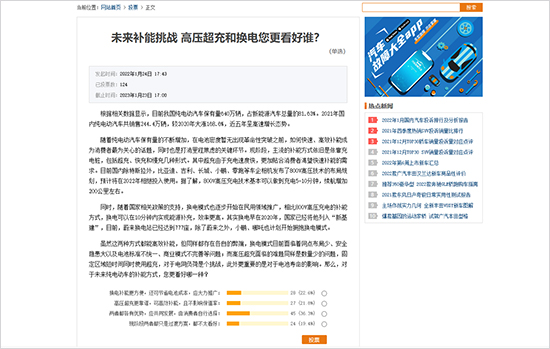 车质网专项调查
选择换电还是超充模式是行业内争论多年的话题,在“3060”大背景下,相关政策不断加码,让这个争议话题再次浮出水面。事实上,这两种技术发展路径可以说各具优劣势,但归根结底两种模式的目的是一致的,都是为了纯电动车用户实现高效补能,而且两者之间也存在一定的互补关系。
中国电动汽车百人会副理事长欧阳明高院士在此前接受记者采访时曾表示,现阶段充电、换电要融合发展,而不是非此即彼。中信证券研究认为,预计未来5年国内新能源汽车补能市场仍将维持充电为主、换电为辅的格局,但换电模式在部分高端乘用车和营运类车辆的应用推广将明显加速。
不难发现,就现阶段而言,换电模式和超充模式虽然各有利弊,但在很多方面两者其实是可以形成优势互补的。
1、换电模式建设成本高,投诉回报率低,但超充站相对而言建设成本较低,盈利周期短。小鹏汽车CEO何小鹏此前曾表示,小鹏汽车超充站早在2019年12月便已开始单月盈利,距离其与特来电合作建设的首个超充站正式运营仅过去3个月。
2、换电模式现阶段所面临的“电池标准不统一”问题,一座充电站难以为各个品牌的车型服务,但大部分品牌超充站其实可以完全规避这个问题。此前小鹏和蔚来的超充桩都是可以开放给其他品牌车型使用的,但随着保有量增加,目前大部分商圈内的超充桩都仅供自家品牌车型使用。从这个角度来看,超充桩共享其实不存在技术层面上的障碍,相比于实现电池标准统一,超充桩共享反而更容易实现。此前特斯拉CEO马斯克在海内外社交媒体表示,特斯拉已经在荷兰开始试点向其它品牌纯电动车开放特斯拉超充桩。
3、从补能效率来看,超充显然并不是最佳选择,在这方面换电站的表现无疑要更加适合快速补能。但在城市场景下,换电模式受限于布局数量,反而不如超充方便。所以在很多情况下,两者是可以形成有效互补的,特别是对于蔚来车型而言,既能换电,又能使用超充,更方便车主根据实际情况来选择。
4、高速公路上,超充站布局数量较少,且由于充电时长问题很容易造成排队现象。而换电站在高速路网的布局虽然同样不多,但得益于其超高的补能效率,对于长途补能来说更为适用,而超充站可为其提供有效补充。
总结:
现阶段来看,超充好还是换电更好,依旧没有标准答案。但可以肯定的是,两者都能有效解决纯电动车用户的补能焦虑,且两者并非水火不相容,不存在谁比谁更靠谱的直接竞争关系。因此,在固态电池等更先进的电池技术尚未突破之前,两者将在未来一段时间内发展共存,不过两者在技术和用户体验层面也都有需要进一步解决的问题。根据车质网此前做的调查显示,更多的消费者认为两者各具优势,应共同发展。
Following the National Day holiday in 2021, pure electric vehicle travel in the Spring Festival of the Year of the Tiger has reappeared the problem of energy replenishment. Many car owners have complained through social media that they have to queue for hours to charge before they can continue driving when they are 2,300 kilometers away from home. According to the estimates of the China Passenger Transport Association, the sales of new energy vehicles will exceed 6 million in 2022. Based on this, it is estimated that the number of new energy vehicles in China is expected to exceed 14 million in 2022. Based on the current proportion, the number of pure electric vehicles will be May break the 10 million mark. With the substantial increase in the number of pure electric vehicles in China year by year, and the breakthrough of core battery technology still needs time, the current stage of pure electric vehicle energy replenishment anxiety, especially long-distance energy replenishment anxiety will become the main contradiction in the development of new energy vehicles.
1. Different development paths Overcharging and battery swapping have their own potentials
Xiaopeng 800V high voltage SiC platform + 480kW high voltage superchargerXpeng 800V high voltage SiC platform + 480kW high voltage supercharger
In fact, the state has been actively promoting the solution of the energy replenishment problem of pure electric vehicles from the policy level. During the two sessions in 2020, charging facilities were included in the 2020 government work report for the first time as one of the seven new infrastructures. In the 2021 government work report, it is clearly proposed to increase charging piles, power stations and other facilities. Since 2021, relevant policies have been continuously introduced. In January 2022, the National Development and Reform Commission, the National Energy Administration and other departments jointly issued the Implementation Opinions of the National Development and Reform Commission and Other Departments on Further Improving the Service Support Capability of Electric Vehicle Charging Infrastructure. , clearly proposed to give full play to the energy storage characteristics of power batteries, explore the promotion of orderly charging, V2G and other forms, to achieve the coordinated interaction between electric vehicles and the power grid. In mining farms, ports, urban transshipment and other scenarios, the power exchange mode is promoted according to local conditions. At the same time, it is also proposed to provide financial support for the construction of public charging piles.
The huge demand for energy supplementation has created a huge market space. Some institutions predict that from 2021 to 2025, there will be more than 5 times the growth space of charging piles, and the growth space of power exchange stations may exceed 20 times. Faced with the big cake of the energy supplement market, various forces including auto companies and upstream battery suppliers are competing for layout, but the technical paths of development are different. Among them, Xiaopeng, GAC Aian, Lantu and other car companies are more optimistic about high-voltage overcharging technology, actively deploying research and development overcharging technology platforms, and launching new cars that support overcharging technology. Taking Xiaopeng as an example, in 2021, it released a number of technologies such as 800V silicon carbide platform and 480kW high-voltage supercharging pile, and actively deployed in the field of charging stations. At present, it has become the first charging car company in the industry to connect to 337 cities across the country, covering a full range of In 333 prefecture-level cities and 4 municipalities directly under the Central Government, a total of 813 brand supercharging stations have been launched. In 2021, GAC Aian and Lantu also successively released super-speed battery technology and self-developed 800V high-voltage platform and super fast charging technology.
The layout of traditional car companies is earlier. Feng Sihan, CEO of Volkswagen China, said earlier that the battery replacement model will be very difficult to develop due to the high cost. In contrast, Volkswagen China seems to be more optimistic about the overcharge model. As early as 2019, it established a joint venture with FAW Group, Xingxing Charge and Jianghuai Automobile - Kaimeisi New Energy Technology Co., Ltd., which has now become a domestic charging pile ( station) head enterprise. As of 2021, Kamax has launched more than 600 super charging stations in 80 cities across the country, with over 6,000 charging terminals, and has independently developed a new generation of HPC high-power charging technology with a maximum output voltage of 1,000V.
The first battery swap station between Sinopec and NIO The first battery swap station between Sinopec and NIO
Compared with the supercharged development mode, although the battery swap mode lacks advantages in terms of vehicle cost for private car owners, it can greatly shorten the energy replenishment time, improve the car owners car experience, and also help to alleviate battery degradation and large changes in the vehicle value retention rate. It has a competitive advantage in the field of commercial vehicles and high-end passenger vehicles. It has been favored by upstream companies such as the national team represented by State Power Investment Corporation and Sinopec, as well as battery suppliers. Among them, the two national teams of Sinopec and State Power Investment Corporation will make frequent moves in 2021. In April 2021, Sinopec signed agreements with Aodong New Energy and NIO respectively to establish a strategic partnership. At the same time, the worlds first fully intelligent power exchange station jointly built by Sinopec and NIO was also put into operation. Zhang Yuzhuo, chairman and party secretary of Sinopec Group, said that during the 14th Five-Year Plan period, Sinopec will plan to deploy 5,000 charging and swapping stations. The State Power Investment Corporation plans to increase its total investment by 115 billion by 2025, promote 200,000 heavy trucks, and invest in 4,000 swap stations. It is undeniable that the entry of the national team will undoubtedly promote the rapid development of the power exchange industry.
More importantly, CATL, a leading domestic power battery company, also announced its entry into the power exchange market, and in January 2022, its wholly-owned subsidiary, Times Electric, released the power exchange service brand VOGO (Lexing Power Exchange) , the first batch of 10 cities will be selected to open the layout of swap stations. The addition of upstream supplier companies will undoubtedly have a huge impact on the entire battery swap industry, especially in solving the problems that plague the development of battery swap models such as inconsistent battery standards, and may play a positive role in promoting it.
2. Solve the pain points of energy supplementation. At this stage, overcharging and battery replacement are not perfect.
Tesla Supercharge Station Tesla Supercharge Station
As far as the current stage of development is concerned, both overcharging and battery swapping can help users achieve high-efficiency energy replenishment. Both have outstanding advantages, but they also have some drawbacks that need to be resolved urgently.
As far as supercharging is concerned, especially the brand supercharging piles, all major car companies are actively launching them. At present, the layout in the city is becoming more and more perfect, but the progress of the layout on the expressway network is relatively slow. According to the latest data disclosed by the National Development and Reform Commission, there are currently 13,800 expressway charging piles (including fast charging and supercharging) in China, which are mainly concentrated in Beijing-Tianjin-Hebei-Shandong, Yangtze River Delta, Pearl River Delta and other regions, and have not yet achieved full coverage. Under the circumstance of there are far more cars than piles, the problem of long charging queues on expressways during holidays has become increasingly prominent. This year, during the Spring Festival of the Year of the Tiger, the problem of high-speed energy replenishment reappeared. Some car owners posted on WeChat Moments that they had to queue for 3 hours to charge when they were 250 kilometers away from home.
Compared with the small number of charging piles, fast charging/overcharging also has problems in daily use. According to the feedback from the owner, Mr. Dong, to the car quality network, the luxury brand pure electric vehicle he purchased was running at high speed, and the fast charging piles of three consecutive charging stations could not be used normally, and the charging power was only 7-12KW. At the same time, some car owners reported that the self-owned brand pure electric vehicle purchased took too long to charge when using fast charging, which did not match the promotion at the time of purchase, which seriously affected the use experience.
In addition, there are also some problems in the application level of overcharging, the most worthy of attention is the impact on the urban power grid. With the accelerated layout of supercharged piles, the power load on the power grid in the region is bound to increase. Although the State Grid will expand and transform the line every year, it is difficult to keep up with the energy demand of charging stations, especially During the peak charging period, when multiple vehicles are overcharged together, the charging efficiency will also decrease.
In terms of energy replenishment efficiency, the supercharge mode is not perfect, and there is still a certain gap compared with battery replacement. In this regard, the car quality network has done relevant tests. Taking Tesla V2 supercharger as an example, regardless of the queue situation, it takes 29 minutes to charge Model 3 (configuration|inquiry) from 18% to 60%, which increases the battery life. Mileage 256km. For Weilais second-generation power exchange station, it takes about 5 and a half minutes to replace a fully charged battery for a car without considering the queue. From the time point of view, the energy supplement efficiency of the two can be judged.
Weilai Swap Station Weilai Swap Station
Compared with fast charging and supercharging, the power exchange stations developed in recent years also face many problems, the most prominent of which is that there are few outlets in cities. For car owners commuting in the city, although it is more convenient to change the battery, due to the small number of replacement stations in the city, the queue time is much longer than the battery replacement time. Some car owners have reported that at a new power brand replacement station in Beijing, the queue for nearly an hour, and the time required for battery replacement is less than 6 minutes. This is still in a big city like Beijing. For local cities, the difficulty of changing electricity can be imagined.
In terms of the cost of use that car owners are concerned about, the current performance of the battery swap station is not perfect. Although the battery swap mode is convenient, the cost of the car owner is higher than that of fast charging and overcharging. Taking a new power brand as an example, for the first car owner, on the premise of retaining the home charging pile, he can enjoy 4 free battery swap rights per month, and charging fees and service fees will be charged in the future. Some car owners have experienced this, including electricity and service fees, which are equivalent to 1.7 yuan/kWh after conversion, while the charging standard for a certain brand of overcharge is 1.35 yuan/kWh, which also includes electricity and service charges.
From an investment point of view, the high input cost and long payback period of the battery replacement model have formed an industry consensus. According to data disclosed by the mobile energy service provider GCL Nengke, the construction cost of a single passenger car swap station is as high as 5 million yuan, and the investment recovery period is about 5.21 years. As a unicorn in the power exchange industry, although Aodong New Energy is favored by capital, it just completed a B round of strategic financing of 1.5 billion yuan in September last year, but judging from its 2018-2020 revenue, net Profits were -186 million yuan, -162 million yuan and -249 million yuan respectively, and have been in a state of loss for three consecutive years, and there is an expanding trend.
In addition, there are certain bottlenecks in the battery replacement mode at the technical level, the most prominent of which is the non-uniform battery standard. At this stage, the low standardization of batteries of different brands and even the same brand is the most difficult problem facing the development of the battery swap mode. Although companies such as Weilai are rapidly deploying brand replacement stations, at this stage they can only serve their own brand models, and it is difficult to cover more products. The entry of Ning Wang seems to play a positive role in this problem, but some people in the industry are not optimistic about it, thinking that the chassis structure and other core assets of the company are unlikely to be opened to third-party companies. Therefore, in the short term, the problem of inconsistent battery standards is still unsolved.
3. The advantages of overcharging and battery swapping complement each other, and they should develop together in the short term
Vehicle Quality Network Special Investigation Vehicle Quality Network Special Investigation
The choice of battery replacement or overcharge mode has been a topic of debate in the industry for many years. Under the background of 3060, relevant policies have been continuously increased, which has brought this controversial topic to the surface again. In fact, these two technology development paths can be said to have their own advantages and disadvantages, but in the final analysis, the purpose of the two models is the same, both are for pure electric vehicle users to achieve high-efficiency energy supplementation, and there is a certain complementary relationship between the two. .
Academician Ouyang Minggao, vice chairman of the China Electric Vehicle 100 Association, said in an interview with reporters that at this stage, charging and battery swapping should be integrated and developed, not one or the other. According to the research of CITIC Securities, it is expected that the domestic new energy vehicle energy supplement market will still maintain a pattern of charging as the mainstay and battery swap as a supplement in the next five years, but the application and promotion of the battery swap model in some high-end passenger cars and commercial vehicles will be significantly accelerated. .
It is not difficult to find that, at this stage, although the battery swap mode and the overcharge mode have their own advantages and disadvantages, in many aspects, the two can actually form complementary advantages.
1. The power exchange mode has high construction cost and low return on complaints, but the construction cost of supercharging stations is relatively low and the profit cycle is short. Xiaopeng Motors CEO He Xiaopeng has previously stated that the Xiaopeng Motors supercharger station has been profitable in a single month as early as December 2019, and it has only been three months since the official operation of the first supercharger station jointly built by it and Tedian.
2. The problem of non-uniform battery standards faced by the battery swap mode at this stage makes it difficult for one charging station to serve models of various brands, but most brands of supercharging stations can completely avoid this problem. Previously, the supercharged piles of Xiaopeng and NIO were open to other brand models, but with the increase in ownership, most of the supercharged piles in the business district are only used for their own brand models. From this point of view, there is actually no technical obstacle in the sharing of supercharging piles. Compared with the unified battery standard, the sharing of supercharging piles is easier to achieve. Earlier, Tesla CEO Elon Musk said on social media at home and abroad that Tesla has begun a pilot program in the Netherlands to open Tesla supercharged piles to other brands of pure electric vehicles.
3. From the perspective of energy replenishment efficiency, overcharging is obviously not the best choice. In this regard, the performance of the power exchange station is undoubtedly more suitable for rapid energy replenishment. However, in urban scenarios, the battery swapping mode is limited by the number of layouts, and it is not as convenient as overcharging. Therefore, in many cases, the two can effectively complement each other, especially for NIO models, which can not only change the battery, but also use overcharge, which is more convenient for car owners to choose according to the actual situation.
4. On the expressway, the number of supercharging stations is small, and it is easy to cause queues due to the problem of charging time. Although the layout of swap stations in the expressway network is also not much, it is more suitable for long-distance energy replenishment thanks to its ultra-high energy replenishment efficiency, and the supercharger station can provide it with an effective supplement.
Summarize:
At this stage, whether it is better to overcharge or replace the battery, there is still no standard answer. But what is certain is that both can effectively solve the energy supplement anxiety of pure electric vehicle users, and the two are not incompatible, and there is no direct competition between who is more reliable than the other. Therefore, before more advanced battery technologies such as solid-state batteries have broken through, the two will develop and coexist for a period of time in the future, but both also have problems that need to be further solved in terms of technology and user experience. According to a previous survey conducted by the car quality network, more consumers believe that the two have their own advantages and should develop together.