

这个与当下产能对比差距明显的数字引起了关注与争议,不过对于这一目标,蜂巢能源做出了自己的分析。
例如持续增长的市场端的需求,行业预测到2025年,全球交通领域的电动化及电力领域储能对锂电池的总需求量将超过1.8TWh。例如精确的产能拆分:600GWh有效产出大概在450GWh左右,其中,乘用车将产出340GWh、储能领域将产出37GWh、非高速车将产出40GWh、商用车将产出37GWh。例如蜂巢能源持续增长的装机量:这家2018年脱胎于长城汽车的企业短短几年已经跻身全球动力电池装机量前十。
具体到产能落地方面,除了筹划资本、扩建工厂,生产技术的创新也是不可或缺的保障。2月25日,蜂巢能源邀请部分媒体参观了其位于常州金坛的电池生产工厂,进一步回答了这一问题。
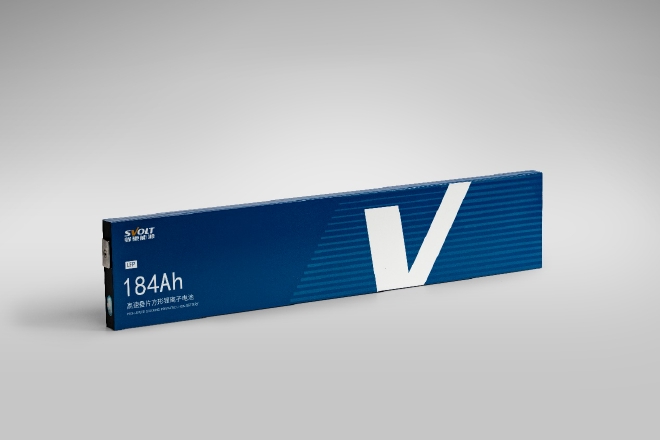
资料显示,蜂巢能源在全球规划了11个生产基地,金坛园区为蜂巢能源建设的首个车规级动力电池AI超级工厂,共分四期建设,总产能规划为68GWh。目前,一期、二期工厂已经正式投产,在二期工厂中建设了首条“短刀”电池量产线,满产产能将达到2.5GWh。
蜂巢能源对于金坛工厂的定位为“车规级AI智能工厂”,在这个言必称智能的时代,技术的影响不仅改变了消费端的产品,更深刻影响了工业制造本身。
首先是“车规级”,主要体现在工厂的管控严苛程度,从电池产品生产过程中的异物管控,到毛刺控制,从AI智能技术的应用,到装配技术和集成化工艺的应用,最终目的就是为了保证生产出符合汽车使用的高品质电池产品。例如蜂巢能源在厂房洁净度方面采用了万级洁净度控制标准,局部实现千级控制,达到芯片级生产的洁净度标准。湿度控制上,从投料-电芯封口全制程1%湿度管控。
“汽车上使用的零部件都要伴随整车应对各种各样的路况、环境、温度、湿度等等,使用期限在8-10年以上,所以对产品的可靠性都有超高的要求,因此,车规级也就代表着产品的可靠性”。蜂巢能源工艺资深总监刘小安表示。
匀浆、涂布、辊压、模切、叠片、装配六大工序是短刀电池的生产过程中的主要环节,每一个环节的表现都直接决定最终产品的安全和性能发挥。
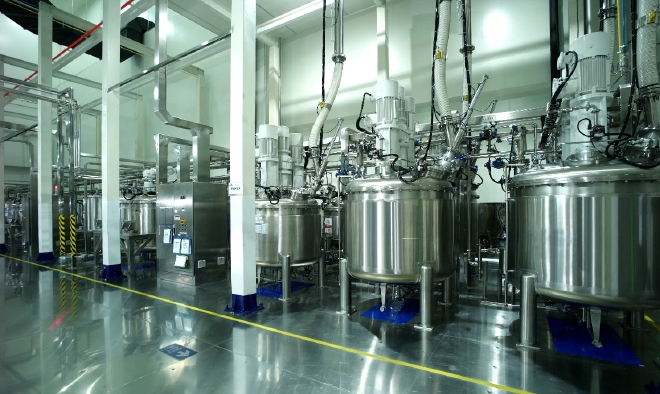
(蜂巢能源短刀电池匀浆产线)
要实现短刀电池的大规模量产,首先要确保浆料的大规模生产。刘小安提到,蜂巢能源在匀浆环节采用2300L大容量双行星搅拌设备,适合车用动力电池大规模生产,每罐浆料生产的电池可配套纯电动车约10辆左右。为了提升品质管控,蜂巢能源还在浆料输送环节比行业通行标准多加了一道除磁工序,从而使得浆料级磁性异物含量可以做到50ppb以下。
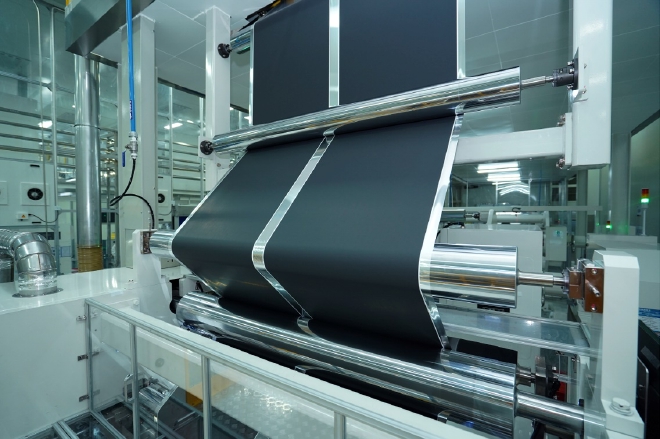
(蜂巢能源超宽幅涂布机)
短刀电池的长度比普通电芯更长,涂布的宽幅、速度、精度决定了短刀电池极片生产的效率和品质,1400mm超宽幅涂布机可以做到一次出两列,涂布速度高达80m/min。
在辊压工序,蜂巢能源通过正极热辊压,负极双辊连续滚轧,正极辊压速度80m/min,在辊压机上进行电磁加热、红外线在线烘烤、在线激光测厚、废料边去除等技术集成,通过简化工艺实现更高效率。
在模切工序,最大的挑战来自于效率和成本,蜂巢能源在该环节全部应用了激光模切,不仅节省了模具投入和设备维护的费用,模切效率也得到大幅提升,由原来的30m/min,提升至40-50m/min,效率提升40%。刘小安还透露,下一个短刀产线会采用工艺进一步集成的设备,效率也将大幅提升。
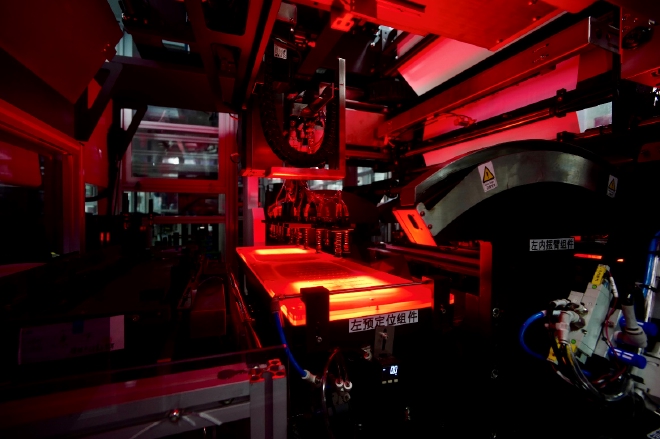
(蜂巢能源超高速叠片机)
对于采用叠片工艺的电池生产,叠片速度一直是行业痛点,蜂巢能源目前采用的采用双工位叠片效率高达0.4s/片。同时,已研发完成的下一代超高速刀片式电芯极组成型设备,叠片效率可以做到0.125s/片,届时叠片效率将超越卷绕极组成形效率。
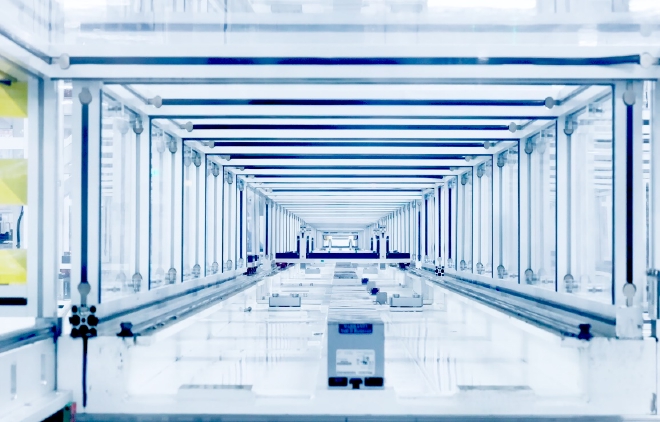
(蜂巢能源磁悬浮物流线)
针对短刀电芯单极组重量、长度尺寸的特点,蜂巢能源使用了磁悬浮物流线。相比于传统皮带物流线,磁悬浮物流线传输效率更高,可以达到皮带物流线的10倍,同时,磁悬浮运输车的加减速更加均匀,极组对齐度更易保证。
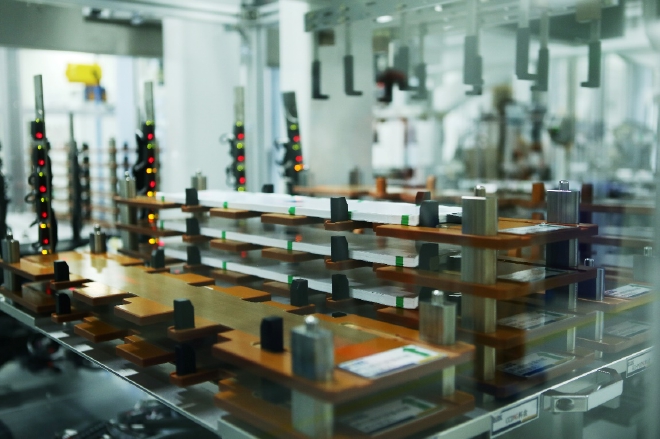
(短刀电池装配环节)
在装配环节,异物管控和焊接是两大核心。为了保证装配过程的品质,蜂巢能源在电芯整个装配过程设置了4次hipot测试,颗粒物检测级别由业内200微米提升至50微米水平。而为了解决刀片电芯最难的周边焊接问题,蜂巢能源采用对缝焊接,正负极同时周边焊接,提升焊接效率50%以上,同时,采用超高速焊缝自动追踪焊接工艺,提升焊接良品率10%以上,焊接速度可以达到200mm/s。
为了保证高质量高效率的生产,蜂巢能源在现场管控还做了很多的措施,这包括导入极组入壳前少抓取设计、防止划伤和过程变形的设计等,在基于蜂巢能源车规级AI智能动力电池工厂的各项标准,最终保证了短刀电池的规模化量产。
智能化给消费者带来了生活方式的改变,在工厂之内,则是效率、精度的提升以及生产成本的下降。以数字化、网络化和智能化为核心特征的新一代信息技术正在与动力电池制造深度融合。
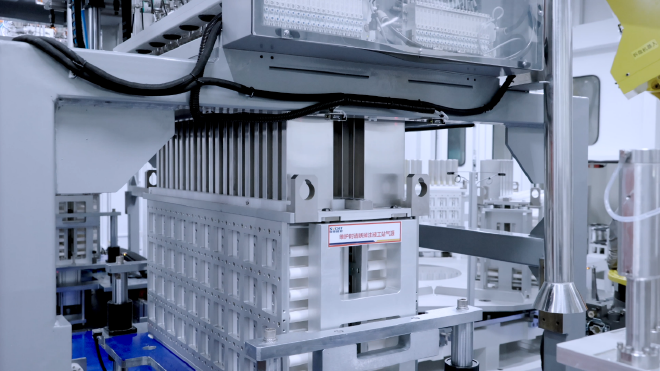
和很多现代化的整车产线一样,短刀电池的生产车间内已经很少能看到员工的身影,据相关负责人介绍,蜂巢能源已经通过AI大数据分析进行质量智能检测,实现质量检测的智能化及无人化,利用人工智能将不良品的分类与工艺参数结合,自动寻找最佳参数,节约开发时间30%,智能化的设备健康管理,维护先期预警可以降低故障率提高设备稼动率。
蜂巢能源的思路是,通过利用人工智能、先进分析和边缘/云计算等技术,对于效率提升、品质提升、碳追溯等各个环节,都将会起到至关重要的作用。
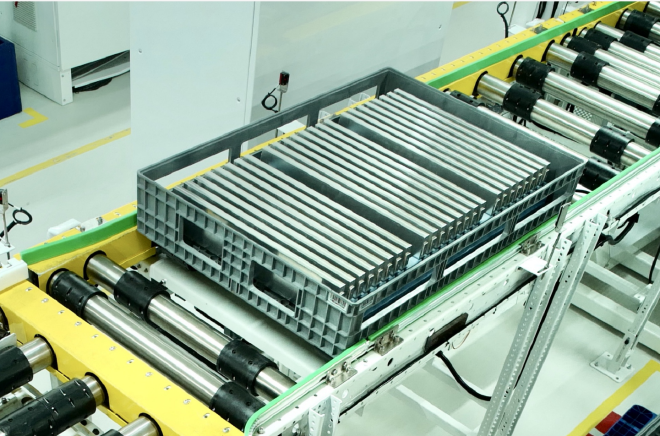
动力电池的军备竞赛中,诱惑成倍放大的另一面是竞争加剧,各家在不断扩张规模的同时,也要进一步明确自身的优势与特点。在蜂巢能源看来,面向TWh时代,动力电池企业要实现车规级高品质的动力电池产能和高效高质量交付,就需要不断革新制造工艺、更为严苛的把控生产过程,并通过智能化赋能制造。
On December 8 last year, the second battery day of Honeycomb Energy was held in Changzhou, and it released the 600 strategy of the leader for 2025. At the press conference, in addition to the announcement of the four major support strategies and the implementation of the electric global short-cut in the future, the most memorable thing in the market is the goal of increasing the global production capacity planning target to 600GWh in 2025.
This figure, which is significantly different from the current production capacity, has caused concern and controversy. However, Honeycomb Energy has made its own analysis on this goal.
For example, the growing market demand, the industry predicts that by 2025, the total demand for lithium batteries for electrification in the global transportation sector and energy storage in the power sector will exceed 1.8TWh. For example, the precise production capacity split: the effective output of 600GWh is about 450GWh, of which, the passenger car will output 340GWh, the energy storage field will output 37GWh, the non-high-speed vehicle will output 40GWh, and the commercial vehicle will output 37GWh. For example, the continuous growth of installed capacity of Honeycomb Energy: this company, which was born out of Great Wall Motors in 2018, has ranked among the top ten installed capacity of power batteries in the world in just a few years.
In terms of production capacity implementation, in addition to planning capital and expanding factories, innovation in production technology is also an indispensable guarantee. On February 25, Honeycomb Energy invited some media to visit its battery production plant in Jintan, Changzhou, to further answer this question.
According to the data, Honeycomb Energy has planned 11 production bases around the world. The Jintan Park is the first vehicle-grade power battery AI super factory built by Honeycomb Energy. It will be constructed in four phases with a total production capacity of 68GWh. At present, the first and second phase factories have been officially put into production, and the first short knife battery mass production line has been built in the second phase factory, with a full production capacity of 2.5GWh.
Honeycomb Energys positioning of the Jintan factory as a vehicle-grade AI smart factory, in this era of intelligence, the impact of technology has not only changed consumer products, but also profoundly affected industrial manufacturing itself.
Comprehensive short-cut and 600GWh production capacity: Honeycomb Energy decided to develop production line technology first
The first is the vehicle level, which is mainly reflected in the strictness of the factorys control, from foreign matter control in the production process of battery products, to burr control, from the application of AI intelligent technology, to the application of assembly technology and integrated technology, and finally The purpose is to ensure the production of high-quality battery products suitable for automotive use. For example, Honeycomb Energy adopts the 10,000-level cleanliness control standard in the cleanliness of the workshop, and partially achieves the 1000-level control to achieve the cleanliness standard of chip-level production. In terms of humidity control, 1% humidity control is carried out in the whole process from feeding material to cell sealing.
The parts used in the car must accompany the whole vehicle to cope with various road conditions, environment, temperature, humidity, etc., and the service life is more than 8-10 years, so there are ultra-high requirements for product reliability. Therefore, the vehicle grade also represents the reliability of the product.” Liu Xiaoan, senior director of Honeycomb Energy Technology, said.
The six major processes of homogenization, coating, rolling, die-cutting, lamination, and assembly are the main links in the production process of short-knife batteries, and the performance of each link directly determines the safety and performance of the final product.
Comprehensive short-cut and 600GWh production capacity: Honeycomb Energy decided to develop production line technology first
(Honeycomb energy short knife battery homogenization production line)
To achieve large-scale mass production of short-knife batteries, we must first ensure large-scale production of slurry. Liu Xiaoan mentioned that Honeycomb Energy adopts 2300L large-capacity double planetary mixing equipment in the homogenization process, which is suitable for the large-scale production of vehicle power batteries. The batteries produced by each tank of slurry can be matched with about 10 pure electric vehicles. In order to improve quality control, Honeycomb Energy also added an additional demagnetization process in the slurry transportation process than the industry standard, so that the content of magnetic foreign matter at the slurry level can be below 50ppb.
Comprehensive short-cut and 600GWh production capacity: Honeycomb Energy decided to develop production line technology first
(Honeycomb Energy Ultra Wide Coating Machine)
The length of the short knife battery is longer than that of the ordinary cell. The width, speed and precision of the coating determine the efficiency and quality of the production of the short knife battery pole piece. Up to 80m/min.
In the rolling process, the honeycomb energy is rolled by the positive electrode, and the negative electrode is continuously rolled with two rollers. Other technologies are integrated to achieve higher efficiency by simplifying the process.
In the die-cutting process, the biggest challenge comes from efficiency and cost. Honeycomb Energy has applied laser die-cutting in this process, which not only saves the cost of die investment and equipment maintenance, but also greatly improves the die-cutting efficiency. min, increased to 40-50m/min, the efficiency increased by 40%. Liu Xiaoan also revealed that the next short knife production line will use equipment with further integrated processes, and the efficiency will also be greatly improved.
Comprehensive short-cut and 600GWh production capacity: Honeycomb Energy decided to develop production line technology first
(Honeycomb energy ultra-high-speed lamination machine)
For the battery production using the lamination process, the lamination speed has always been a pain point in the industry. The dual-station lamination efficiency currently used by Honeycomb Energy is as high as 0.4s/cell. At the same time, the next-generation ultra-high-speed blade cell pole forming equipment has been developed, and the lamination efficiency can reach 0.125s/piece, and the lamination efficiency will exceed the winding pole forming efficiency.
Comprehensive short-cut and 600GWh production capacity: Honeycomb Energy decided to develop production line technology first
(Honeycomb Energy Maglev Logistics Line)
In view of the characteristics of weight, length and dimension of the short-knife cell monopole group, Honeycomb Energy uses a magnetic levitation logistics line. Compared with the traditional belt logistics line, the transmission efficiency of the magnetic levitation logistics line is higher, which can reach 10 times that of the belt logistics line.
Comprehensive short-cut and 600GWh production capacity: Honeycomb Energy decided to develop production line technology first
(Short knife battery assembly link)
In the assembly process, foreign body control and welding are the two cores. In order to ensure the quality of the assembly process, Honeycomb Energy has set up 4 hipot tests in the entire assembly process of the cell, and the particle detection level has been raised from 200 microns in the industry to 50 microns. In order to solve the most difficult peripheral welding problem of blade cells, Honeycomb Energy adopts butt welding, and the positive and negative electrodes are welded at the same time, which improves the welding efficiency by more than 50%. At the same time, the ultra-high-speed welding seam automatic tracking welding process is adopted to improve the welding yield More than 10%, the welding speed can reach 200mm/s.
In order to ensure high-quality and high-efficiency production, Honeycomb Energy has also taken a lot of measures on site control, including the design of less grabbing before introducing the electrode assembly into the shell, and the design to prevent scratches and process deformation. The standards of the AI-level intelligent power battery factory ultimately ensure the large-scale mass production of short-knife batteries.
Intelligence has brought changes to consumers lifestyles. In factories, it is the improvement of efficiency and precision and the reduction of production costs. A new generation of information technology with digitization, networking and intelligence as its core features is being deeply integrated with power battery manufacturing.
Comprehensive short-cut and 600GWh production capacity: Honeycomb Energy decided to develop production line technology first
Like many modern vehicle production lines, employees are rarely seen in the production workshop of short-knife batteries. According to the relevant person in charge, Honeycomb Energy has carried out intelligent quality inspection through AI big data analysis to achieve intelligent quality inspection. Automated and unmanned, using artificial intelligence to combine the classification of defective products with process parameters to automatically find the best parameters, saving 30% of development time, intelligent equipment health management, and early warning of maintenance can reduce the failure rate and improve the equipment utilization rate .
The idea of Honeycomb Energy is that by using technologies such as artificial intelligence, advanced analysis and edge/cloud computing, it will play a crucial role in improving efficiency, quality, and carbon traceability.
Comprehensive short-cut and 600GWh production capacity: Honeycomb Energy decided to develop production line technology first
In the arms race of power batteries, the other side of the multiplication of temptation is the intensification of competition. While expanding the scale, each company must further clarify its own advantages and characteristics. In the view of Honeycomb Energy, facing the TWh era, power battery companies need to continuously innovate the manufacturing process, strictly control the production process, and use intelligent Enabling manufacturing.