

俊风公司关注到,特斯拉将推出锰电池。他是什么?
3月22日,特斯拉德国柏林工厂正式投产,在德国总理奥拉夫·舒尔茨的注视下,特斯拉首席执行官埃隆·马斯克(Elon
Musk)情绪高涨,现场再度翩翩起舞,帮助交付了第一台Model Y。这是2020年1月上海工厂Model
3首次交付以来,马斯克第二次在公众面前手舞足蹈,似乎将成为马斯克新工厂投产的保留节目。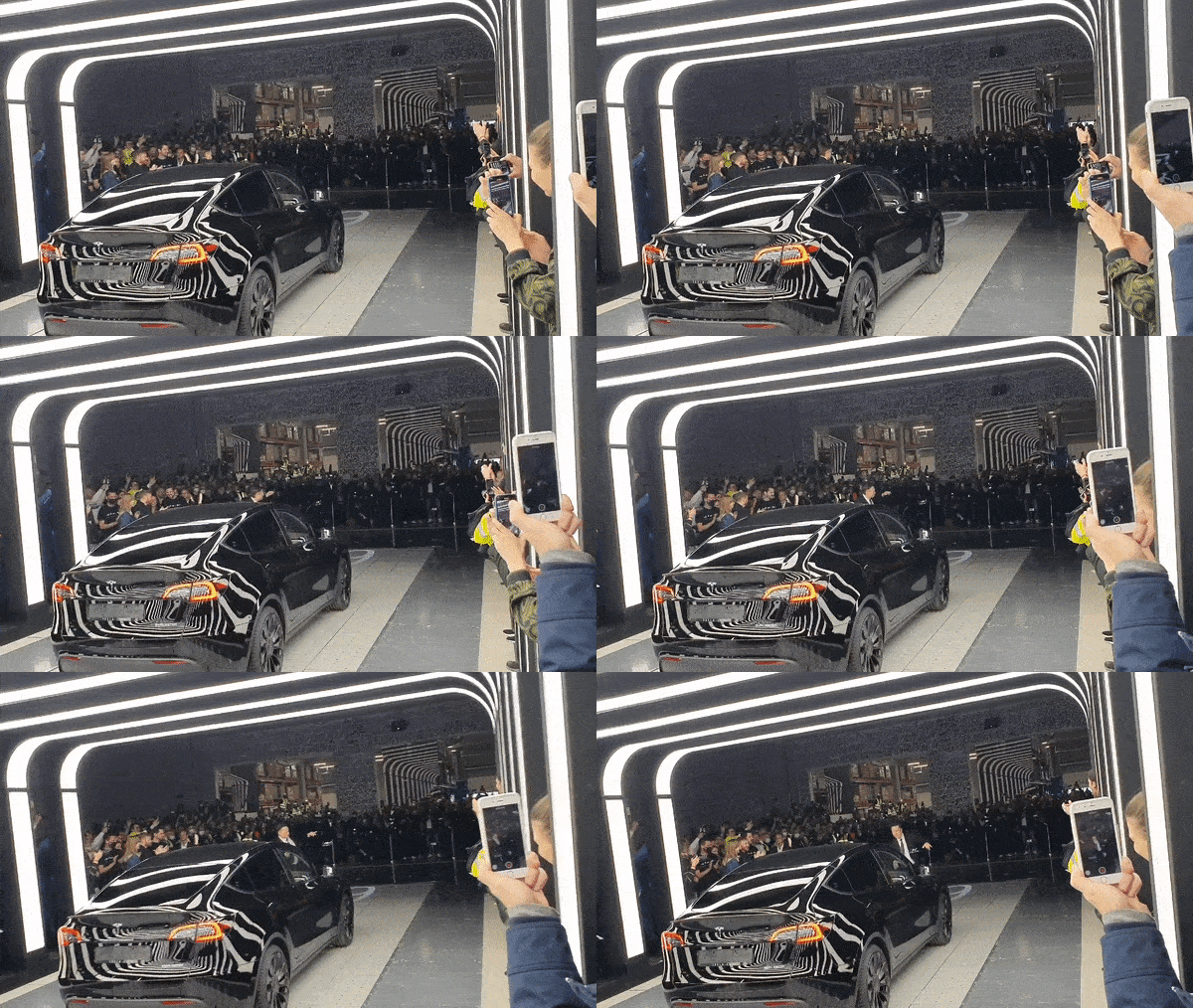
考虑到特斯拉对柏林工厂投产许可所做的努力,马斯克今天的乐观情绪可以理解。要知道,柏林工厂最初定于2021年9月投产,但由于一系列延误和批评者的强烈反对,进度比预期的要慢很多。3月初,柏林工厂最终获得环境许可,打开了德国制造Model Y量产大门,特斯拉也完成了工厂最后400项辅助设备的要求,确保柏林工厂正式投产。
马斯克感谢了德国,分享了对柏林工厂和德国的感激之情。投产活动之后,预计柏林工厂将逐步提高产量,可能需要一段时间才能达到美国加州弗里蒙特工厂或中国上海工厂的水平。要知道,马斯克对柏林工厂寄予厚望,毕竟这里将生产德国制造的特斯拉电动车,内外都具有一流的品质,拥有特斯拉目前最先进的涂装车间,将提供独特的车身颜色选择,比如深红色。
发布会现场,马斯克还宣布,特斯拉看到了锰基阴极在电池化学方面的潜力,这是马斯克在交付首台Model Y后对于石墨烯的电池的回应。他认为,制造石墨烯的复杂性持怀疑态度,但确实表示特斯拉正在努力用更多材料制造电池。马斯克重申,电动车行业需要更多地关注电池供应链,直至矿物材料,在可以预见的未来,特斯拉将与行业其他公司一样专注于长续航电动车的镍基化学物质以及短续航电动车的磷酸铁化学物质。
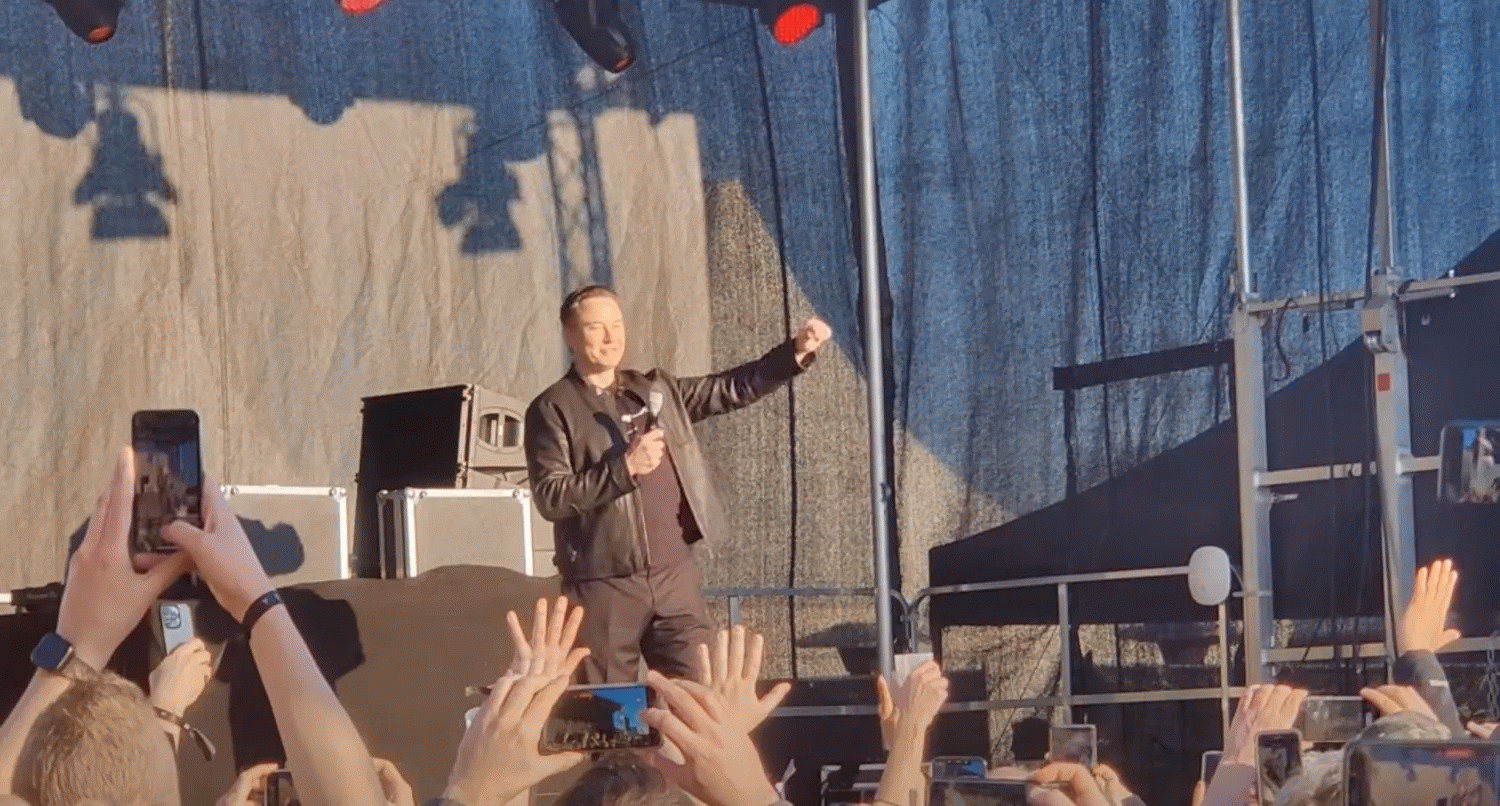
不过,马斯克还表示锰基电池也在考虑之列:“我认为锰是一个有潜力的化学物质。”一段时间以来,特斯拉一直在探索电池中使用更多的锰。马斯克曾在2020年特斯拉电池日上说道:“用三分之二的镍和三分之一的锰制造阴极相对简单,这将使我们能够用相同数量的镍制造50%的电池体积。”
回到现场,马斯克并没有详细说明特斯拉正在研究它,但听起来可能是一种与镍和铁基化学物质一起使用的解决方案:“在非常大的规模上,我们最终需要数千万甚至数亿吨。因此,用于大规模生产这些电池的材料必须是普通材料,否则无法规模化。”
已经有不少研究机构发表过富锰阴极电池的论文,这种电池可以提供比磷酸铁更高的能量密度,同时提供可能比富镍电池更低的价格。特斯拉已经在一些电池化学中使用锰,但它并不是其中任何一种的主要成分。例如,NMC化学物质使用了大量的锰,特斯拉之前已经将这种化学物质用于Powerwall;日产也在聆风的原始电池中使用了富锰阴极。
最后,马斯克重申需要专注于电池矿物供应,以加速向电动交通和可再生能源的过渡。按照马斯克的预计,特斯拉需要300太瓦时的电池生产才能完全过渡到未来的可持续发展愿景。更多消息,敬请关注后续报道。
Junfeng Company is concerned that Tesla will launch manganese batteries. what is he?
On March 22, Tesla's Berlin plant was officially put into production. Under the watch of German Chancellor Olaf Schultz, Tesla CEO Elon Musk was in high spirits, and the scene danced again. Helped deliver the first Model Y. This is the second time Musk has danced in front of the public since the first delivery of the Model 3 at the Shanghai factory in January 2020, and it seems to be a repertoire for Musk's new factory to start production. Tesla Berlin plant put into production Musk dances new manganese battery under development
Musk's optimism today is understandable, given Tesla's efforts to license its Berlin plant. Be aware that the Berlin plant was originally scheduled to start production in September 2021, but due to a series of delays and backlash from critics, progress has been much slower than expected. In early March, the Berlin factory finally obtained the environmental permit, opening the door to mass production of the Model Y made in Germany. Tesla also completed the factory's last 400 auxiliary equipment requirements, ensuring that the Berlin factory was officially put into production.
Musk thanked Germany and shared his gratitude to the Berlin factory and Germany. Following the start-up activity, the Berlin plant is expected to gradually ramp up production, and it may take some time to reach the level of the Fremont, California, U.S., or Shanghai, China plant. You know, Musk has high hopes for the Berlin factory. After all, Tesla electric cars made in Germany will be produced here, with first-class quality inside and out, and Tesla’s current most advanced paint shop will provide unique body color options. , such as dark red.
At the press conference, Musk also announced that Tesla saw the potential of manganese-based cathodes in battery chemistry, which was Musk's response to graphene-based batteries after delivering the first Model Y. He is skeptical about the complexity of making graphene, but does say Tesla is working on making batteries with more materials. Musk reiterated that the electric vehicle industry needs to pay more attention to the battery supply chain, down to the mineral materials, and that for the foreseeable future, Tesla will focus on nickel-based chemicals for long-range electric vehicles and short-range electric vehicles like the rest of the industry. Iron Phosphate Chemicals for Cars.
Tesla Berlin plant put into production Musk dances new manganese battery under development
However, Musk also said that manganese-based batteries are also under consideration: "I think manganese is a potential chemical." Tesla has been exploring the use of more manganese in batteries for some time. Musk once said at Tesla Battery Day 2020: "It is relatively simple to make a cathode with two-thirds nickel and one-third manganese, which will allow us to make 50% of the battery volume with the same amount of nickel. ."
Back on the scene, Musk didn't elaborate that Tesla was working on it, but it sounded like a solution that could be used with nickel and iron-based chemicals: "At a very large scale, we end up needing thousands of Tens of thousands or even hundreds of millions of tons. Therefore, the materials used to mass-produce these batteries must be common materials, otherwise they cannot be scaled.”
Many research institutions have published papers on manganese-rich cathode batteries, which can provide higher energy density than iron phosphate, while offering a possibly lower price than nickel-rich batteries. Tesla already uses manganese in some battery chemistries, but it's not a major ingredient in any of them. For example, the NMC chemistry uses a lot of manganese, which Tesla has used in the Powerwall before; Nissan also uses manganese-rich cathodes in the Leaf's original batteries.
Finally, Musk reiterated the need to focus on battery mineral supply to accelerate the transition to electric mobility and renewable energy. According to Musk's projections, Tesla needs 300 terawatt-hours of battery production to fully transition to its future sustainability vision. For more news, stay tuned for follow-up reports.