

单车最高补贴189万元
电车汇消息:今日,北京市经济和信息化局发布《关于开展2021-2022年度北京市燃料电池汽车示范应用项目申报的通知》,其中明确了燃料电池汽车示范项目的四种主要应用场景,并且对不同车辆的运营给予补贴。
燃料电池汽车示范应用项目主要采取“应用场景示范+‘示范应用联合体’申报”方式实施,由市经济和信息化局组织开展,结合燃料电池汽车示范应用年度任务,明确应用场景并向社会公布,由符合条件的相关企业组成“示范应用联合体”进行申报,通过第三方机构评审后择优予以支持。示范应用联合体”由燃料电池汽车整车制造企业牵头,会同燃料电池系统企业、车辆运营企业、加氢站运营企业组成。
示范应用场景为以下四种:
(一)省际间专线货运
在京津冀范围内,支持总质量31吨以上的燃料电池重型载货汽车,开展省际间大宗物资运输示范应用,重点推广北京-天津、北京-唐山等货运专线。
(二)城市重型货物运输
在本市及周边地区,支持总质量25吨以上的燃料电池重型载货汽车,开展工业企业原材料及零部件、渣土及砂石骨料等重型货物运输示范应用。
(三)城市物流配送
在本市及周边地区,支持总质量12吨及以下的燃料电池中轻型载货汽车,重点围绕城市生活保障,开展城市冷链物流配送、城市普通物流配送示范应用。
(四)城市客运
在本市及周边地区,支持燃料电池大型客车,开展城市观光、旅游接驳、高校及企事业单位班车通勤、科技产业园区摆渡等客运示范应用。
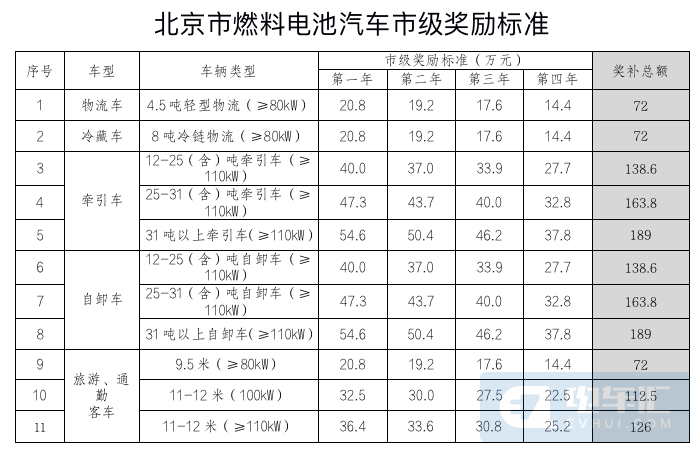
对于燃料电池车辆的奖励则分为推广奖励和运营奖励,其中车辆推广奖励以当年8月13日至次年8月12日为一个核算年度,对纳入并完成示范应用项目的燃料电池汽车,按照中央奖励1:1的标准安排市级车辆推广奖励资金。对示范期内用氢行驶里程未满3万公里的燃料电池汽车,在示范期结束后,由市经济和信息化局、市财政局全额追回市级车辆推广奖励资金。
同时要求上牌车辆在第一年度用氢行驶里程需超过0.75万公里,此后三年每年度用氢行驶里程需超过1.25万公里,且车辆在示范城市群内用氢行驶里程比例需达到80%以上。
整车制造企业需按照扣除车辆推广奖励资金的价格销售,在每个核算年度结束后1个月内申报补贴。
对轻型车辆(总质量4.5吨以下)、中重型车辆(总质量4.5吨及以上,含客车),分别按照0.3万元/万公里、1万元/万公里的标准给予运营奖励,在每个核算年度内车均最低用氢行驶里程满足要求后,方可享受运营奖励,每个核算年度车均用氢行驶里程以6万公里为奖励上限,超出部分可结转至以后年度。车辆运营奖励资金按照应用场景内车辆用氢行驶里程总和,以万公里为单位取整计算。
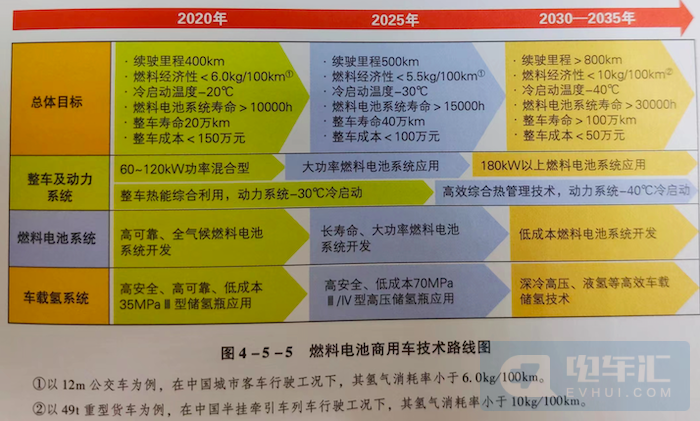
从北京的补贴细则来看,仅仅是车辆推广奖励,四年下来,单车最低奖励就有72万元,最高达到了189万元。而根据《节能与新能源汽车技术路线图2.0》介绍,2020年49吨重型燃料电池货车的整车成本约为150万元。高额补贴之下,对于短期内迅速实现燃料电池车推广应用是有极大促进作用的。
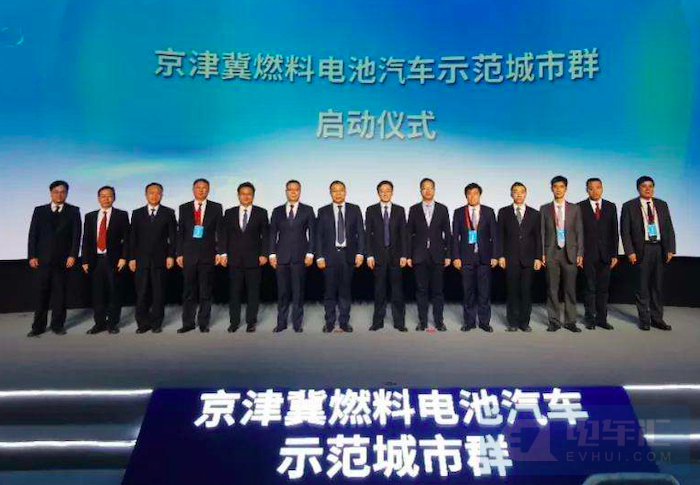
京津冀是首批获准的燃料电池汽车示范城市群,是由北京大兴区联合海淀、昌平等六个区,以及天津滨海新区、河北省保定市、唐山市、山东省滨州市、淄博市等共12个城市(区)共同组成的,北京则是其中的核心。
根据《北京市氢燃料电池汽车产业发展规划(2020-2025年)》提出的目标,到2023年要推广氢燃料电池汽车3000辆,到2025年要实现氢燃料电池汽车累计推广量突破1万辆。目前北京正在以高额补贴助推目标实现。
The maximum subsidy for bicycles is 1.89 million yuan
Tramway News: Today, the Beijing Municipal Bureau of Economy and Information Technology issued the Notice on the Application of the 2021-2022 Beijing Fuel Cell Vehicle Demonstration Application Project, which clarifies the four main application scenarios of the fuel cell vehicle demonstration project, and Subsidies are given for the operation of different vehicles.
The fuel cell vehicle demonstration application project is mainly implemented by the method of application scenario demonstration + demonstration application consortium declaration, organized by the Municipal Bureau of Economy and Information Technology, combined with the annual task of fuel cell vehicle demonstration application, to clarify the application scenario and announce it to the public , and a demonstration application consortium is formed by relevant enterprises that meet the conditions to apply, and the best ones will be supported after being reviewed by a third-party agency. The Demonstration Application Consortium is led by a fuel cell vehicle manufacturing enterprise, and is composed of a fuel cell system enterprise, a vehicle operation enterprise, and a hydrogen refueling station operation enterprise.
The demonstration application scenarios are as follows:
(1) Inter-provincial special line freight
Within the scope of Beijing-Tianjin-Hebei, support fuel cell heavy-duty trucks with a total mass of more than 31 tons, carry out demonstration applications of inter-provincial bulk material transportation, and focus on promoting Beijing-Tianjin, Beijing-Tangshan and other freight lines.
(2) Urban heavy cargo transportation
In this city and surrounding areas, support fuel cell heavy-duty trucks with a total mass of more than 25 tons, and carry out demonstration applications for the transportation of heavy-duty goods such as raw materials and parts, muck and sand aggregates in industrial enterprises.
(3) Urban logistics and distribution
In the city and surrounding areas, support fuel cell medium and light trucks with a total mass of 12 tons or less, focusing on urban life security, and carry out demonstration applications of urban cold chain logistics distribution and urban general logistics distribution.
(4) Urban passenger transport
In the city and surrounding areas, support fuel cell large passenger vehicles, and carry out demonstration applications of passenger transportation such as urban sightseeing, tourism connection, shuttle bus commuting of universities, enterprises and institutions, and ferry to science and technology industrial parks.
Beijing issues subsidy standards for fuel cell vehicles with a maximum subsidy of 1.89 million yuan
The incentives for fuel cell vehicles are divided into promotion incentives and operation incentives. The vehicle promotion incentives take August 13th of the current year to August 12th of the following year as an accounting year. For fuel cell vehicles included in and completed demonstration application projects, according to The central incentive 1:1 standard arranges municipal vehicle promotion incentive funds. For fuel cell vehicles with a hydrogen driving mileage of less than 30,000 kilometers during the demonstration period, the Municipal Bureau of Economy and Information Technology and the Municipal Finance Bureau will fully recover the municipal vehicle promotion incentive funds after the demonstration period ends.
At the same time, it is required that the mileage of licensed vehicles using hydrogen exceeds 7,500 kilometers in the first year, and the mileage of vehicles using hydrogen in each of the following three years must exceed 12,500 kilometers, and the proportion of vehicles using hydrogen in the demonstration city group must reach more than 80%. .
Vehicle manufacturers are required to sell at the price deducting the incentive funds for vehicle promotion, and declare subsidies within 1 month after the end of each accounting year.
For light vehicles (with a total mass of less than 4.5 tons) and medium and heavy vehicles (with a total mass of 4.5 tons and above, including passenger cars), operating incentives will be given at the rates of 30,000 yuan/10,000 km and 10,000 yuan/10,000 km respectively. Only after the minimum hydrogen mileage of vehicles in the accounting year meets the requirements can they enjoy operating rewards. The average hydrogen mileage of vehicles in each accounting year is capped at 60,000 kilometers, and the excess can be carried forward to future years. The vehicle operation reward fund is calculated according to the sum of the hydrogen mileage of the vehicle in the application scenario, rounded up to the unit of 10,000 kilometers.
Beijing issues subsidy standards for fuel cell vehicles with a maximum subsidy of 1.89 million yuan
Judging from Beijings subsidy rules, it is only the vehicle promotion reward. After four years, the minimum reward for a bicycle is 720,000 yuan, and the highest is 1.89 million yuan. According to the introduction of the Energy Saving and New Energy Vehicle Technology Roadmap 2.0, the vehicle cost of a 49-ton heavy-duty fuel cell truck in 2020 is about 1.5 million yuan. Under the high subsidies, it will greatly promote the rapid realization of the promotion and application of fuel cell vehicles in the short term.
Beijing issues subsidy standards for fuel cell vehicles with a maximum subsidy of 1.89 million yuan
Beijing-Tianjin-Hebei is the first batch of approved fuel cell vehicle demonstration city clusters. It is composed of six districts of Beijing Daxing District, Haidian and Changping, as well as Tianjin Binhai New Area, Baoding City, Hebei Province, Tangshan City, Binzhou City, Shandong Province, Zibo City, etc. A total of 12 cities (districts) are formed together, of which Beijing is the core.
According to the goals set forth in the Beijing Hydrogen Fuel Cell Vehicle Industry Development Plan (2020-2025), 3,000 hydrogen fuel cell vehicles will be promoted by 2023, and the cumulative promotion of hydrogen fuel cell vehicles will exceed 10,000 by 2025. . At present, Beijing is boosting the goal with high subsidies.