

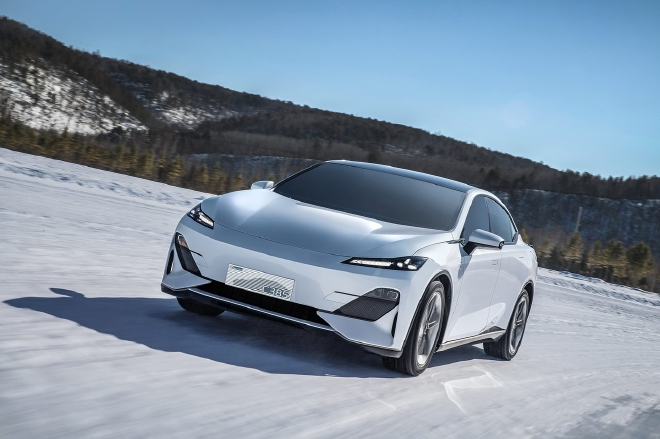
今日,长安深蓝发布其EPA1纯电平台,并宣布旗下首款车型将提供纯电版、增程版与氢燃料电池版。继插混大战后,增程式电动车也正展示出其旺盛的生命力。但此前的增程车型均为SUV,如今终于下探到轿车,似乎也应证了市场对增程式的认可。
4月21日,长安全新数字品牌长安深蓝EPA1纯电平台正式发布。同时,其首款车型C385亮相。除了纯电版本,C385还将提供增程版与氢燃料电池版。
增程版满油满电在CLTC综合工况下续航里程可达1200公里以上,纯电综合工况续航里程也可达200公里以上。
长安深蓝将EPA1定义为国内率先量产的自主轿车增程式系统。
目前国内市场上在售的增程式汽车,最有名的当属理想ONE无疑。仅凭这一款车型,一个配置就能牢牢占据新势力第一梯队的位置,市场对增程式的接受度可见一斑。
此外,岚图FREE,AITO问界M5(配置|询价)等也都出了增程版。但这几款车型无一例外都是SUV。目前还没有一款真正上市的增程式轿车。
如果长安深蓝C385率先量产发布,那么,它将成为国内首款增程式轿车。
当然,要摘下这个头衔长安深蓝就得抓紧时间了。不久前发布的哪吒S也宣布将推出增程版。而岚图也表示将推出增程式轿车。据岚图内部消息,“按照梦想家的节奏,预计会在广州车展亮相,明年正式上市”。
增程式轿车比SUV来得要晚那么一段时间,其原因也正是增程式汽车的一大弱点:由于增加了发动机和发电机,对电动车来说,就是额外的重量和额外的空间,导致车内空间压缩,重量增加。因而,对于增程式动力系统来说,空间较大的SUV比轿车容易实现。
而难实现并不等于不能实现。
从长安深蓝C385和哪吒S,到岚图即将亮相的新款车型,增程式轿车或许也将兴起新的风潮。
大众中国区CEO冯思瀚曾公开称增程式是“最糟糕的方案”,但理想的车主们显然用实际行动投了票。
严格意义上来说,增程式实际上属于插电式混合动力汽车的一种。插混车指的是可以外接充电获取电能的混合动力电动汽车,可实现纯电、串联和并联三种动力模式。
而增程式实际上就是插电式混动的串联式,只是多了个增程器(发动机和发电机的组合)。
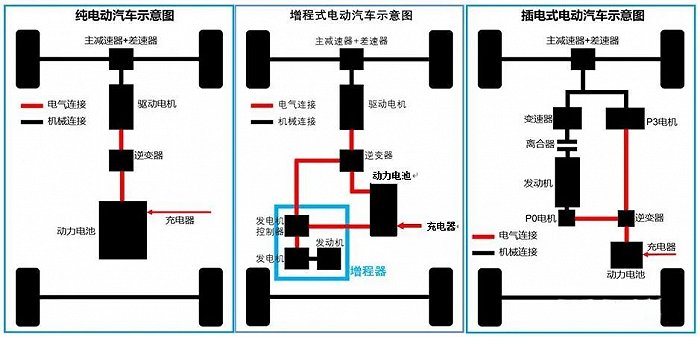
增程式车辆的发动机不参与驱动,而是通过发电机将化学能转化为电能,再通过驱动电机进行牵引力驱动控制。
增程式汽车的行驶都由驱动电机带动。驱动电机可以直接由动力电池提供能量,即通过外部充电实现;也可由内部增程器发电提供能量,即通过加油将化学能转化为电能;此外,增程器也可发电为动力电池充电。
增程式的优势很明显,相比纯电动车,增程式电动车续航里程更长。以理想ONE为例,其在NEDC综合工况下续航里程1080km,纯电续航里程188km。
且其动力电池的预设电量降到一定值后,增程式就会启动,动力电池组处于浅充浅放状态,有利于电池的循环次数和寿命。
相比燃油车,增程式由于不用发动机驱动,可以处于非常舒服的工作状态,省油且可以少保养。
此外,由于增程式电动汽车动力电池容量相对较小,无论是充电还是加油,其补能速度都很快。
而且,由于增程式是纯电驱动,其驱动效率与车速变化类似于纯电动车,因而提速较快。
但由于电机的特性,其在60km/h内是经济区间,而高速工况下则是效率低下区间,因而和纯电动汽车一样,增程式电动汽车同样是在中低速工况下效率更高,能耗更低,而在高速工况下能耗会增加。这也是增程式的一个弱点。
说完基本的优缺点,以下,我们再来看一下增程式的用车成本。
据北京交通发展研究院刚刚发布的《2021北京市通勤特征年度报告》,2021年北京中心城区平均通勤耗时51分钟,平均每天通勤距离13.3公里。
以智驾网不久前实测过的增程式SUV问界M5的数据为例,其四驱版本在WLTC工况下纯电续航里程为150km,按照往返27公里计算,纯电续航正好可用一周五天上下班。
我们来看一下其与油电混和动力车和燃油车的150km用车成本对比。
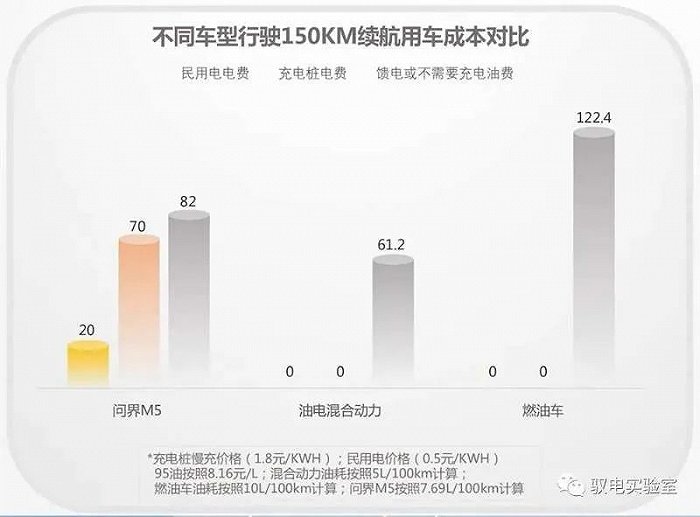
从上表可以看出,增程式动力车型在城市路况按纯电动汽车使用,其用车成本相比燃油车成本可下降84%。当然,该数据是基于民用电基础。当然,即便是使用公共充电桩,其用车成本也依然低于燃油车,但相较油电混合动力车会稍高。
问界M5官方数据电池容量40度。而根据我们实际测算的结果,馈电油耗约在6.67L/100公里。
就用车成本来看,增程式相较于燃油车也是有很大优势的。
这是SUV的数据,移植到轿车上,由于其体积更小,重量更轻,无疑能实现更低的能耗。
当前,众多纯电动汽车以堆砌更多容量的电池来增加总续航里程,而Model 3却以67度电的电池容量实现600公里以上的续航里程,达到了极高的能耗比。
这得益于Model 3作为B级紧凑级轿车,车身重量相比SUV车型更轻。
目前众多纯电动SUV电池容量普遍在70度以上,但续航里程在真实路况并不能保证400公里的稳定续航。
而增程式动力轿车,以45度电(哪吒S和长安深蓝C385都没有公布电池容量,其真实容量可能会低于45度电),按照实现300公里的稳定续航即可以彻底实现日常出行用电,远行用油的组合式出行模式。
从长安深蓝C385与哪吒S已经公布的部分参数信息来看,长安深蓝C385在CLTC工况下综合续航里程达1200km以上,纯电综合工况续航里程200km以上,且馈电油耗低至4.5升/100公里以下。
哪吒S增程版NEDC综合续航里程1100km,纯电续航里程200km。
也完全足够在日常通勤时用电,远行用油。
而随着电池密度增加,厚度降低,增程式动力车型配备60度或以上的电池并不会显著增加车身重量。再辅以燃油模式,将大大提高续航,形成更经济实用的组合。
长安新能源总经理邓承浩在发布会上称,其EPA1上的增程系统具备超高发电效率,1L油可发电约3.3度。这主要得益于其极致效率的动力系统协同设计与控制、基于实时路况的智能能量管理控制和高压缩比深度阿特金森循环等技术创新。
这也是C385增程版能实现低至4.5L/百公里馈电油耗的底气。
在目前动力电池尚无革命性突破,充电设施仍在建设时期,我们认为增程动力有着强大的生命力。
而且,燃油车多年来的基础设施也可以为增程式动力提供服务。
从增程式SUV下探到增程式轿车,也正是市场对增程式的认可在供应端的反馈。
Today, Changan Deep Blue released its EPA1 pure electric platform and announced that its first model will provide pure electric version, extended range version and hydrogen fuel cell version. Following the plug-in war, extended-range electric vehicles are also showing their strong vitality. However, the previous range-extended models were all SUVs, and now the sedan has finally been found, which seems to be a testament to the markets recognition of the extended range.
On April 21, Changans new digital brand Changan Deep Blue EPA1 pure electric platform was officially released. At the same time, its first model C385 was unveiled. In addition to the pure electric version, the C385 will also provide an extended-range version and a hydrogen fuel cell version.
The cruising range of the extended-range version can reach more than 1,200 kilometers under the CLTC comprehensive operating conditions, and the cruising range of the pure electric comprehensive operating conditions can also reach more than 200 kilometers.
Changan Deep Blue defines EPA1 as the first mass-produced autonomous car program extension system in China.
The most famous of the range-extended cars currently on sale in the domestic market is undoubtedly the Ideal ONE. With this model alone, one configuration can firmly occupy the position of the first echelon of the new forces, and the markets acceptance of the program extension is evident.
In addition, Lantu FREE, AITO M5 (Configuration | Inquiry), etc. have also released extended-range versions. But these models are, without exception, SUVs. There is no real extended-range sedan on the market yet.
If Changan Deep Blue C385 is the first to be released in mass production, it will become the first extended-range car in China.
Of course, if you want to take down the title Changan Deep Blue, you have to hurry up. The Nezha S, which was released not long ago, also announced that it will launch an extended-range version. Lantu also said that it will launch an extended-range sedan. According to Lantus internal news, according to the rhythm of the dreamer, it is expected to be unveiled at the Guangzhou Auto Show and officially launched next year.
The extended-range sedan came a while later than the SUV, and the reason is precisely one of the major weaknesses of the extended-range car: due to the addition of an engine and a generator, for electric vehicles, it is extra weight and extra space, causing the car The inner space is compressed and the weight is increased. Therefore, for the extended-range power system, the SUV with more space is easier to realize than the car.
And difficult to achieve does not mean impossible.
From the Changan Dark Blue C385 and Nezha S, to the new models that Lantu is about to debut, the extended-range sedan may also be a new trend.
Feng Sihan, CEO of Volkswagen China, once publicly called the program extension the worst solution, but the ideal car owners obviously voted with practical actions.
Strictly speaking, the extended range is actually a type of plug-in hybrid vehicle. Plug-in hybrid vehicles refer to hybrid electric vehicles that can be externally charged to obtain electric energy, and can realize three power modes: pure electric, series and parallel.
The range extender is actually a series of plug-in hybrids, but there is an extra range extender (a combination of an engine and a generator).
Following the plug-in war, the extended-range sedan has not yet been launched and has begun to be rolled out?
The engine of the extended-range vehicle does not participate in the drive, but converts chemical energy into electrical energy through the generator, and then uses the drive motor for traction drive control.
The driving of the extended-range car is driven by the drive motor. The drive motor can be powered directly by the power battery, that is, by external charging; it can also be powered by the internal range extender, which converts chemical energy into electrical energy by refueling; in addition, the range extender can also generate electricity to charge the power battery.
The advantages of extended-range electric vehicles are obvious. Compared with pure electric vehicles, extended-range electric vehicles have longer cruising range. Taking the ideal ONE as an example, its cruising range is 1080km under NEDC comprehensive conditions, and its pure electric cruising range is 188km.
And when the preset power of the power battery drops to a certain value, the program extension will start, and the power battery pack will be in a state of shallow charging and shallow discharging, which is beneficial to the cycle times and life of the battery.
Compared with fuel vehicles, the extended range can be in a very comfortable working state because it is not driven by an engine, saving fuel and requiring less maintenance.
In addition, due to the relatively small capacity of the extended-range electric vehicle power battery, whether it is charging or refueling, its energy replenishment speed is fast.
Moreover, since the extended range is a pure electric drive, its driving efficiency and speed change are similar to those of a pure electric vehicle, so the speed increase is faster.
However, due to the characteristics of the motor, it is an economical range within 60km/h, while it is a low-efficiency range under high-speed conditions. Therefore, like pure electric vehicles, extended-range electric vehicles are also more efficient at medium and low speed conditions. The energy consumption is lower, while the energy consumption increases at high speed conditions. This is also a weakness of the extension program.
After talking about the basic advantages and disadvantages, lets take a look at the cost of using a car with an extended program.
According to the 2021 Beijing Commuting Characteristics Annual Report just released by the Beijing Institute of Transportation Development, in 2021, the average commute time in the central urban area of Beijing is 51 minutes, and the average daily commute distance is 13.3 kilometers.
Taking the data of the extended-range SUV Wenjie M5 measured by Zhijia.com as an example, its four-wheel-drive version has a pure electric cruising range of 150km under WLTC conditions. Based on a round-trip calculation of 27 kilometers, the pure electric cruising range can be used for just one week and five weeks. Day to get off work.
Lets take a look at its cost comparison with the 150km vehicle cost of gasoline-electric hybrid vehicles and fuel vehicles.
Following the plug-in war, the extended-range sedan has not yet been launched and has begun to be rolled out?
As can be seen from the above table, the extended-range power models are used as pure electric vehicles in urban road conditions, and the cost of their vehicles can be reduced by 84% compared with the cost of fuel vehicles. Of course, this data is based on the domestic electricity base. Of course, even if you use a public charging pile, the cost of using a car is still lower than that of a fuel vehicle, but it will be slightly higher than a gasoline-electric hybrid vehicle.
The official data of Wenjie M5 has a battery capacity of 40 degrees. According to our actual calculation results, the fuel consumption of the feeder is about 6.67L/100km.
As far as the cost of using the car is concerned, the extended range also has a great advantage over fuel vehicles.
This is the data of SUV, transplanted to the car, because of its smaller size and lighter weight, it can undoubtedly achieve lower energy consumption.
At present, many pure electric vehicles increase the total cruising range by stacking more capacity batteries, while the Model 3 achieves a cruising range of more than 600 kilometers with a battery capacity of 67 kWh, achieving a very high energy consumption ratio.
This is due to the fact that the Model 3, as a B-segment compact sedan, is lighter in weight than SUV models.
At present, the battery capacity of many pure electric SUVs is generally above 70 degrees, but the cruising range cannot guarantee a stable cruising range of 400 kilometers under real road conditions.
The extended-range power sedan, with 45 kWh (Nezha S and Changan Deep Blue C385 have not announced the battery capacity, its real capacity may be lower than 45 kWh), according to the stable battery life of 300 kilometers, it can be completely used for daily travel. Combined travel mode with electricity and oil for long-distance travel.
Judging from some of the parameter information that Changan Deep Blue C385 and Nezha S have announced, Changan Deep Blue C385 has a comprehensive cruising range of more than 1200km under CLTC conditions and a cruising range of more than 200km under pure electric conditions, and the fuel consumption is as low as 4.5 liters. /100 km or less.
The Nezha S extended-range NEDC has a comprehensive cruising range of 1,100km and a pure electric cruising range of 200km.
It is also fully enough to use electricity for daily commuting and oil for long-distance travel.
As the battery density increases and the thickness decreases, the extended-range power model equipped with a battery of 60 degrees or more will not significantly increase the body weight. Supplemented with the fuel mode, it will greatly improve the battery life and form a more economical and practical combination.
Deng Chenghao, general manager of Changan New Energy, said at the press conference that the range extension system on its EPA1 has ultra-high power generation efficiency, and 1L of oil can generate about 3.3 degrees. This is mainly due to technological innovations such as its extremely efficient power system co-design and control, intelligent energy management control based on real-time road conditions, and a high compression ratio and deep Atkinson cycle.
This is also the confidence that the C385 extended-range version can achieve a fuel consumption as low as 4.5L/100 kilometers.
At present, there is no revolutionary breakthrough in the power battery, and the charging facilities are still under construction. We believe that the extended-range power has a strong vitality.
Moreover, the infrastructure of fuel vehicles over the years can also provide services for extended-range power.
From the extended-range SUV to the extended-range sedan, it is also the feedback on the supply side of the markets recognition of the extended-range.