

广州力争氢能汽车产业超百亿,
作为广东氢能产业重镇之一,广州提出,到2025年,力争全市燃料电池汽车(即氢燃料电池汽车)产业规模超百亿元。
广州市发改委官网显示,12月6日,广州市新能源汽车发展工作小组办公室对外公布的《广州市燃料电池汽车示范应用工作方案(2022-2025年)》(简称《工作方案》)提出,到2025年,广州燃料电池汽车达到规模化推广应用,全产业链实现补链强链,初步建成具有国际影响力的氢能枢纽。
根据《工作方案》,到2025年,广州力争全市燃料电池汽车产业规模超过100亿元,培育不少于5家在产业链核心零部件领域排名全国前五的头部企业,打造覆盖全产业链、技术先进的燃料电池汽车核心零部件和整车研发制造基地。
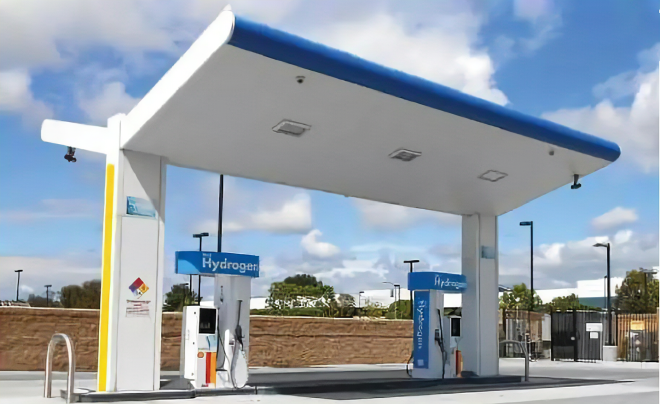
在基础设施方面,《工作方案》提出,到2025年,形成市内年产约3万吨、市外年供应1万吨车用氢气的稳定保障体系,完善加氢站建设审批、运营管理,力争建成加氢站50座以上,形成与燃料电池汽车推广应用相匹配的车用供氢网络。
这也是中国氢能产业发展的一个案例。11月22日,北京市城市管理委员会发布的《北京市燃料电池汽车车用加氢站发展规划(2021-2025年)》提出,到2025年北京市发展1万辆氢燃料电池汽车、建74座加氢站的目标。上海也于近期公布计划称,到2025年实现燃料电池汽车保有量突破1万辆。
第一财经记者根据已经公布的官方资料梳理发现,截至目前,全国至少已有22个省市区出台了省级氢能政策。此外,中国已经初步形成了京津冀、上海、广东、河北、河南等五大燃料电池汽车政策支持示范城市群。
在汽车产业中,氢燃料电池汽车仍是小众产品,但在“双碳”目标背景下,随着2021年氢能被正式写入“十四五”规划和2035年远景目标纲要,这种号称“零排放”的汽车在政策扶持下实现了快速增长。
来自中国汽车工业协会的数据显示,10月份,氢燃料电池汽车产销分别完成277辆和301辆,同比分别增长3.7倍和5.4倍。1月至10月,氢燃料电池汽车产销分别为2700辆和2400辆,同比分别增长1.8倍和1.5倍。
当前,中国氢燃料电池汽车还处在商业化初期,市场保有量刚刚破万辆。但国泰君安等机构此前分析称,随着技术进步和销量上升带来的规模效应,氢燃料电池汽车成本有望持续下降,刺激产品需求;预计2030年国内保有量将突破百万辆。
Guangzhou strives to exceed 10 billion yuan in hydrogen energy automobile industry, and provincial hydrogen energy plans have been released in many places
As one of the key hydrogen energy industrial cities in Guangdong, Guangzhou proposed that by 2025, the citys fuel cell vehicle (i.e. hydrogen fuel cell vehicle) industry scale should exceed 10 billion yuan.
According to the official website of Guangzhou Development and Reform Commission, on December 6, the Guangzhou New Energy Vehicle Development Working Group Office released the Guangzhou Fuel Cell Vehicle Demonstration Application Work Plan (2022-2025) (hereinafter referred to as the Work Plan), which proposed that by 2025, Guangzhou fuel cell vehicles will reach large-scale promotion and application, the whole industry chain will be supplemented and strengthened, and the hydrogen energy hub with international influence will be initially built.
According to the Work Plan, by 2025, Guangzhou will strive to achieve a scale of more than 10 billion yuan in the citys fuel cell vehicle industry, cultivate not less than five leading enterprises ranking among the top five in the field of core components of the industrial chain, and build a research and development and manufacturing base for core components and finished vehicles of fuel cell vehicles covering the entire industrial chain and with advanced technology.
In terms of infrastructure, the Work Plan proposes that by 2025, a stable guarantee system for the annual production of about 30000 tons in the city and the annual supply of 10000 tons of hydrogen for vehicles outside the city will be formed, the construction approval and operation management of hydrogen refueling stations will be improved, and more than 50 hydrogen refueling stations will be built to form a vehicle hydrogen supply network matching the promotion and application of fuel cell vehicles.
This is also a case of the development of Chinas hydrogen energy industry. On November 22, the Beijing Municipal Commission of Urban Management issued the Beijing Development Plan for Fuel Cell Vehicle Hydrogenation Stations (2021-2025), which proposed that Beijing should develop 10,000 hydrogen fuel cell vehicles and build 74 hydrogen refueling stations by 2025. Shanghai also recently announced a plan to achieve a fuel cell vehicle population of more than 10000 by 2025.
According to the published official data, First Financial reporter found that, so far, at least 22 provinces and cities in China have issued provincial hydrogen energy policies. In addition, China has preliminarily formed five demonstration city clusters of fuel cell vehicle policy support, including Beijing Tianjin Hebei, Shanghai, Guangdong, Hebei and Henan.
In the automotive industry, hydrogen fuel cell vehicles are still a niche product. However, in the context of the dual carbon goal, with hydrogen energy officially written into the Fourteenth Five Year Plan and the Vision Target Outline for 2035 in 2021, this so-called zero emission vehicle has achieved rapid growth with policy support.
According to the data from China Automobile Industry Association, in October, the production and sales of hydrogen fuel cell vehicles were 277 and 301, up 3.7 times and 5.4 times respectively year on year. From January to October, the production and sales of hydrogen fuel cell vehicles were 2700 and 2400, respectively, up 1.8 times and 1.5 times year on year.
At present, Chinas hydrogen fuel cell vehicles are still in the early stage of commercialization, with the market holding just over 10000 vehicles. However, Guotai Junan and other institutions previously analyzed that, with the scale effect brought by technological progress and rising sales, the cost of hydrogen fuel cell vehicles is expected to continue to decline, stimulating product demand; It is estimated that the domestic ownership will exceed one million vehicles in 2030.