

据澎湃新闻报道,麒麟电池刚刚已经实现量产。
从发布到量产用时仅9个月,在这期间麒麟电池不断被国内外热议:
以碾压性优势超越特斯拉4680电池——包括电池体积利用率、系统能量密度、快充导热性能等等指标。
让电动车能够全面替代燃油车——4C充电倍率下,10分钟可充至80%,实现1000公里续航。
更值得一提的是,不仅被《时代》周刊评为“2022年度最佳发明”,连首发搭载的车型也跟着蹭了不少热度。
其中就包括极氪、问界、理想。
麒麟电池比特斯拉4680还强
刚刚实现量产的麒麟电池是什么?
最直观的理解,谁先用上了麒麟电池,谁的电动车就可能最先突破1000公里续航大关。
无论是特斯拉的4680大圆柱电池,还是比亚迪的CTB技术,核心都是在电池化学体系突破前,通过结构设计扩大电池容量,来缓解里程焦虑。
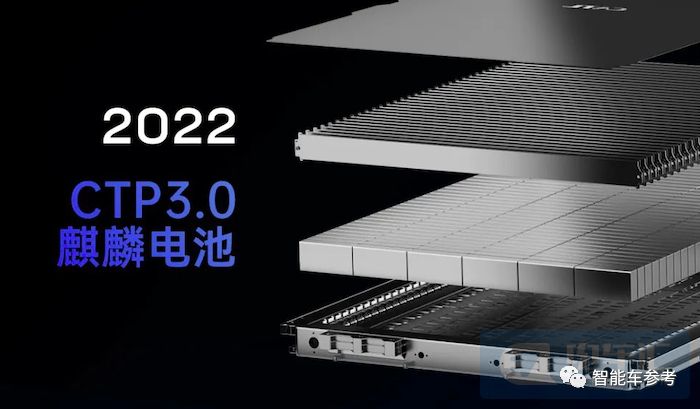
而宁德时代第三代CTP技术——麒麟电池,把系统集成度、能量密度、安全性做到了极致。
先上直观数据:麒麟电池体积利用率突破72%,超过特斯拉4680电池63%的体积利用率。
之所以能够实现较高的体积利用率,部分可以归功于电池包结构的设计。
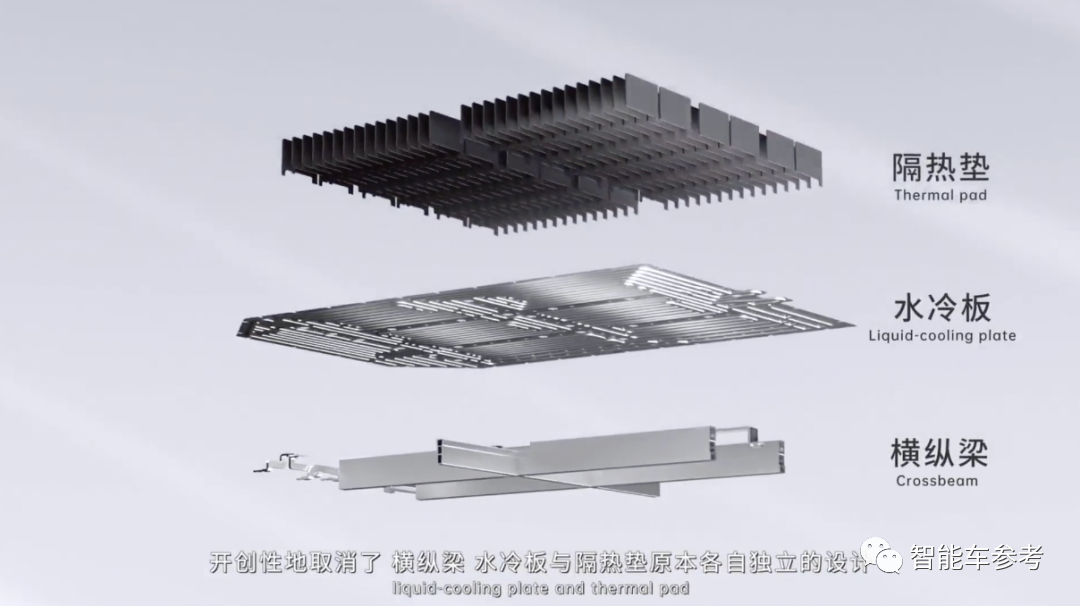
麒麟电池突破了功能部件的边界,将横纵梁、水冷板与隔热垫三合一,集成为多功能弹性夹层。
传统动力电池往往将水冷功能件设于底部,相比之下,麒麟电池将其置于电芯之间,这样做使得换热面积扩大了四倍,电芯控温时间缩短至原来的一半。
而且这样的设计,还能让电池做到5分钟快速热启动,有效缩短充电时间(4C倍率下,支持10分钟从10%充至80%)。
其次,关于电池能量密度,在使用三元电芯的情况下,麒麟电池能量密度可达255Wh/kg;
即便是使用磷酸铁锂电芯,麒麟电池的能量密度也能达到160Wh/kg,超过了目前比亚迪刀片电池的140Wh/kg。
据官方介绍称,在相同的化学体系、同等电池包尺寸下,麒麟电池包的电量,相比4680系统提升13%。
最后在安全方面,宁德时代麒麟电池的电芯能做到急速降温,从而有效阻隔电芯间的异常热量传导。
哪些车型将会搭载麒麟电池?目前已经官宣的,包括极氪009和001、问界系列新车型以及理想。
根据最新报道,MPV极氪009将会是首发车型,预计将在今年第二季度交付,而且极氪汽车刚刚透露,“目前,极氪009麒麟电池版定购的比例很高,这让我们很惊讶。”
所谓CTP(Cell to Pack)技术,也就是直接将电芯集成到模组或电池包,好处是能够省去电池模组的组装环节,降低动力电池的制造成本,同时有效提高电动车的续航里程和经济性。
回顾宁德时代CTP技术迭代的整个过程,从1.0到2.0,再到如今3.0技术产品麒麟电池。
这三代看下来,体积利用率、电芯容量、电池能量密度、续航里程都在不断攀升。
目前,根据宁德时代2022年度财报,他们正在研究CTP的下一代技术CTC(Cell To Chassis)。CTC能够将动力电池电芯、有关组件和底盘进行集成,提升能源使用效率,进一步降低新能源车生产制造成本,提升新能源车性能。
这里值得一提的是,比亚迪的CTB(Cell To Body)其实和CTC技术有点类似,都是将电芯直接安装在底盘里。
不过差别在于,CTC还是将电池包当作一个单独的需要保护的物体,而比亚迪的CTB是利用刀片电池高安全性和高结构强度的特点,融合进车身的整体设计中来。
综上来看,无论是CTP、CTC、CTB技术,其目标最终都是为了提升新能源车的性能。
电动车续航和补能体验,正在追平燃油车
不得不说,新能源车正不断在续航和补能上,实现对燃油车的追平。
而且市面上有一种说法是,从2023年开始,新能源车将进入全面替代燃油车的阶段。
为什么这么说?通常情况下,燃油车加满油后续航里程约为500-800公里,业界普遍认为1000公里的续航里程,是汽车实现电动化的真正拐点。
一方面是,固态电池成了许多车企和电池厂商目前正在研发的重要方向。
固态电池具备更高的能量密度、更长的循环寿命以及更高的安全性,因此也被视作目前动力电池的最优解决方案。
例如国轩高科的半固态电池,单体能量密度达360Wh/kg,配套车型的电池包电量达160KWh,续航里程超过1000km,预计2023年批量交付。
蜂巢能源研发出20Ah级硫系全固态原型电芯,该系列电芯能量密度达350-400Wh/kg,现已顺利通过针刺、200°C热箱等实验,一旦量产应用,电动车可实现续航里程1000公里以上。
赣锋锂电的三元固液混合锂离子电池,据说采用了先进的固态技术,已经官宣将会上车纯电动SUV赛力斯SERES-5,计划于今年上市亮相。
卫蓝新能源推出的150kWh半固态电池,能量密度360Wh/kg,续航可达到1000公里,预计今年上半年实现量产,届时将会搭载在蔚来ET7车型上。
车企端方面也有投入,长安深蓝前不久在广州车展上表示,其半固态电池研发目前已经进入工程化研发阶段,预计在2025年搭载整车;
丰田计划在2025年前实现全固态电池小规模量产;日产宣布将在2025年生产第一批低成本固态电池,并计划于2028年生产一款由固态电池提供动力的全新电动汽车;宝马计划在2025年前推出应用固态电池的原型车,并于2030年前应用于量产车。
另一方面,除了在续航上实现对燃油车的追平,补能的快慢也是一个重要竞速指标。
目前主流纯电汽车采用的是400V平台,充电功率很难突破200KW ,但升级到800V高压平台,可以轻松突破350-400KW的功率。
现在大部分主机厂已经对800V高压平台进行了相关布局,比亚迪、吉利、长城、小鹏、零跑已经发布了800V高压技术的布局规划,理想、蔚来等车企也在积极筹备相关技术。
拿小鹏G9来举例,该车型搭载了800V高压平台技术,配合480kW超快充桩,最快可以实现充电5分钟续航200公里,从10%充电至80%最快仅需15分钟。
此外,吉利路特斯Eletre同样采用800V高压架构,最快20分钟之内将电量从10%充至80%;
北汽极狐阿尔法S支持800V快充,充电功率最高187kW,10分钟即可充近200km的续航,从30%充到80%仅需15分钟。
换电方案就更不用说了,蔚来最新的第三代换电站,官方称相比第二代换电时间缩短了20%,而根据实际测试,蔚来第二代换电站整个流程只需花到5分半钟。
综上来看,电池续航的上限不断被突破,补能方式也在日新月异发生变化。
电动车一直被吐槽的“续航虚”、“充电慢”、“补能难”,恐怕很快就要成为过去和历史。
The best battery in the Ningde era will be delivered soon.
According to Pengpai News, Kirin batteries have just achieved mass production.
It took only 9 months from the release to mass production, during which time, Kirin batteries have been continuously discussed at home and abroad:
Exceeding the Tesla 4680 battery with its rolling advantage - including battery volume utilization, system energy density, fast charging thermal conductivity, and other indicators.
To enable electric vehicles to fully replace fuel vehicles - with a 4C charging ratio, it can be charged to 80% in 10 minutes, achieving a range of 1000 kilometers.
Whats more, not only was it named Best Invention of the Year 2022 by Time magazine, but also the car models carried in the first launch gained a lot of popularity.
Among them are polar krypton, question boundaries, and ideals.
Kirin battery is stronger than Tesla 4680
What is the Kirin battery that has just achieved mass production?
The most intuitive understanding is that whoever uses the Kirin battery first may be the first to break the 1000km endurance limit for their electric vehicles.
Whether its Teslas 4680 large cylindrical battery or BYDs CTB technology, the core is to expand the battery capacity through structural design before breaking through the battery chemistry system to alleviate mileage anxiety.
The third generation CTP technology of the Ningde era, Kirin battery, has achieved the ultimate in system integration, energy density, and security.
First, intuitive data: The volume utilization rate of the Kirin battery has exceeded 72%, surpassing the 63% volume utilization rate of the Tesla 4680 battery.
The high volume utilization achieved can be partly attributed to the design of the battery pack structure.
Kirin battery breaks through the boundaries of functional components, integrating the transverse and longitudinal beams, water cooled plates, and heat insulation pads into a multi-functional elastic interlayer.
Traditional power batteries often have water-cooled functional components located at the bottom. In contrast, Kirin batteries place them between the cells, which increases the heat exchange area by four times and reduces the temperature control time of the cells by half.
Moreover, this design can also enable the battery to achieve a 5-minute fast hot start, effectively shortening the charging time (at 4C magnification, it supports 10 minutes from 10% to 80% charging).
Secondly, regarding the energy density of the battery, when using a ternary cell, the energy density of the Kirin battery can reach 255 Wh/kg;
Even using lithium iron phosphate batteries, the energy density of Kirin batteries can reach 160Wh/kg, surpassing the current 140Wh/kg of BYD blade batteries.
According to official reports, under the same chemical system and the same battery pack size, the power of the Kirin battery pack is 13% higher than that of the 4680 system.
Finally, in terms of safety, the cells of the Ningde Times Kirin battery can achieve rapid cooling, effectively blocking abnormal heat transfer between the cells.
Which vehicles will be equipped with Kirin batteries? Currently, it has been officially announced, including the extremely Krypton 009 and 001, the new model of the Wenjie series, and the ideal.
According to the latest report, the MPV Krypton 009 will be the first model and is expected to be delivered in the second quarter of this year. Moreover, the Krypton car has just revealed, At present, the proportion of orders for the Krypton 009 Kirin battery version is very high, which makes us very surprised.
The so-called CTP (Cell to Pack) technology refers to the direct integration of battery cells into a module or battery pack. The advantage is that it can save the assembly process of the battery module, reduce the manufacturing cost of power batteries, and effectively improve the range and economy of electric vehicles.
Review the entire process of CTP technology iteration in the Ningde era, from 1.0 to 2.0, and now to the 3.0 technology product Kirin battery.
Over the past three generations, the volume utilization ratio, battery cell capacity, battery energy density, and range are all continuously increasing.
Currently, according to Ningde Times 2022 annual financial report, they are studying CTPs next generation technology, CTC (Cell To Chassis). CTC can integrate power battery cells, related components, and chassis to improve energy efficiency, further reduce the production and manufacturing costs of new energy vehicles, and improve the performance of new energy vehicles.
It is worth mentioning here that BYDs CTB (Cell To Body) is actually a bit similar to CTC technology, in that both batteries are directly installed in the chassis.
However, the difference is that CTC still treats the battery pack as a separate object that needs to be protected, while BYDs CTB combines the high safety and structural strength of blade batteries into the overall design of the vehicle body.
In summary, the ultimate goal of CTP, CTC, and CTB technologies is to improve the performance of new energy vehicles.
Electric vehicle endurance and energy supplement experience are catching up with fuel vehicles
It has to be said that new energy vehicles are constantly achieving parity with fuel vehicles in terms of endurance and energy replenishment.
And there is a saying on the market that from 2023, new energy vehicles will enter the stage of fully replacing fuel vehicles.
Why do you say that? Generally, the subsequent mileage of a fuel fueled vehicle is about 500-800 kilometers when it is fully fueled. The industry generally believes that a range of 1000 kilometers is the true turning point for the realization of electric vehicles.
On the one hand, solid-state batteries have become an important research and development direction for many automotive companies and battery manufacturers.
Solid state batteries are also considered the best solution for power batteries due to their higher energy density, longer cycle life, and higher safety.
For example, Guoxuan Hi-Techs semi solid state battery has a single energy density of 360Wh/kg, a battery pack capacity of 160KWh for supporting vehicles, and a range of over 1000km. It is expected to be delivered in batches in 2023.
Honeycomb Energy has developed a 20Ah grade sulfur based all solid-state prototype battery cell, with an energy density of 350-400Wh/kg. This series of battery cells have successfully passed experiments such as acupuncture and 200 ° C hot box. Once applied in mass production, electric vehicles can achieve a range of over 1000 kilometers.
Ganfeng Lithiums ternary solid-liquid hybrid lithium-ion battery is said to use advanced solid-state technology. It has been officially announced that it will be launched as a pure electric SUV, the Celes SERES-5, and is scheduled to debut this year.
The 150kWh semi solid state battery launched by Weilan New Energy has an energy density of 360Wh/kg and a range of 1000 kilometers. It is expected to achieve mass production in the first half of this year, and will be installed on the Ulai ET7 model at that time.
There is also investment in vehicle enterprises. Changan Deep Blue recently stated at the Guangzhou Auto Show that its semi solid state battery research and development has now entered the engineering research and development stage, and it is expected to carry the entire vehicle in 2025;
Toyota plans to achieve small-scale mass production of all solid-state batteries by 2025; Nissan announced that it will produce the first batch of low-cost solid-state batteries in 2025, and plans to produce a new electric vehicle powered by solid-state batteries in 2028; BMW plans to launch prototype vehicles with solid-state batteries by 2025 and apply them to mass production vehicles by 2030.
On the other hand, in addition to achieving parity in the range of fuel vehicles, the speed of energy replenishment is also an important racing indicator.
Currently, mainstream pure electric vehicles use a 400V platform, and it is difficult to exceed 200KW in charging power. However, upgrading to an 800V high-voltage platform can easily exceed 350-400KW in power.
Currently, most main engine manufacturers have carried out relevant layout for 800V high-voltage platforms. BYD, Geely, Great Wall, Xiaopeng, and Zero Run have released layout plans for 800V high-voltage technology. Vehicle companies such as Ideal and Weilai are also actively preparing relevant technologies.
Take the Xiaopeng G9 as an example. This model is equipped with 800V high-voltage platform technology and 480kW ultra-fast charging pile, which can achieve a maximum charging time of 5 minutes and a range of 200 kilometers. From 10% charging to 80% charging, the fastest time is only 15 minutes.
In addition, the Geely Lutes Eletre also uses an 800V high-voltage architecture, which can charge the battery from 10% to 80% within 20 minutes at most;
BAIC Jihu Alpha S supports 800V fast charging, with a maximum charging power of 187kW. It can charge for nearly 200km in 10 minutes, and only takes 15 minutes to charge from 30% to 80%.
The power replacement plan is not to mention that the latest third generation power station in Weilai has a 20% shorter power replacement time compared to the second generation. According to actual testing, the entire process of the second generation power station in Weilai only takes 5 and a half minutes.
In summary, the upper limit of battery life has been constantly breached, and the energy supplement methods are also changing with each passing day.
Electric vehicles have been roast of poor endurance, slow charging and difficult energy supplement. Im afraid they will soon become a thing of the past and history.