

3月24日,宁德时代董事长曾毓群表示,宁德时代的M3P电池预计将于今年量产交付,“大规模应用情况下,M3P电池能够降本增效,低温性能、能量密度优于磷酸铁锂电池,成本优于三元锂电池。具体车型上的应用请见后续发布。”
无独有偶,3月15日,国轩高科在日本电池展览活动上亮相了两款磷酸锰铁锂化学产品:L300、L600。据电池中国了解,L300、L600均采用行业内先进的磷酸锰铁锂化学体系,相比于磷酸铁锂,该体系同样具有高安全性能,且现阶段能量密度最高可达240 Wh/kg,体积能量密度超过500Wh/L。
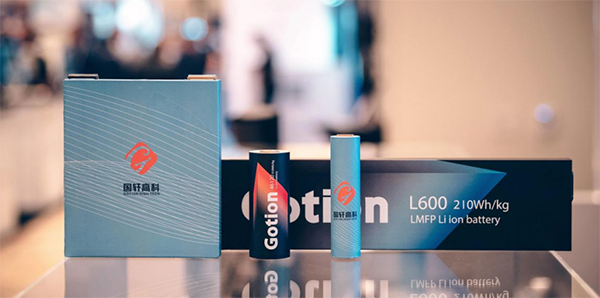
国轩高科表示,L300、L600,将和能量密度310Wh/kg的46系大圆柱电池一同被确定为国轩高科今后主推的“标准化电池”,更好地满足CTP/CTC等高成组效率电池的设计。
近日,电池中国从捷威动力获悉,该公司已推出容量为100Ah的方形磷酸锰铁锂电池产品,能量密度达到220Wh/kg,该产品具有低成本、高安全、长循环等优势。
值得注意的是,宁德时代在今年推出M3P磷酸盐系电池的同时,还与上游材料企业协作,继续加强磷酸盐系电池材料体系开发。
湖南裕能近日发布公告称,近日宁德时代与公司签署《开发协议》,对新型磷酸铁锂产品进行设计开发,并依据宁德时代的需求生产制造新型磷酸铁锂产品。值得一提的是,湖南裕能掌握电导率综合改善技术、高容量多元正极材料生产技术、三元正极材料表面改性技术等正极材料自主核心技术,业内人士猜测,双方开发的新型磷酸铁锂产品,很有可能就是宁德时代的M3P材料体系之一。
挤压中镍三元电池市场?
尽管宁德时代多次在公开场合谈及M3P电池,但截至目前业界并未一睹其真容,也未真正了解其采用的到底是何种磷酸盐体系材料。
在去年2月的投资者调研活动中,宁德时代首次表示,公司将要推出新产品M3P电池,准确来说不是磷酸锰铁锂,还含有其他金属元素,公司称之为磷酸盐体系的三元电池。
据宁德时代介绍,M3P电池保持了磷酸铁锂高安全长寿命特点,电芯能量密度提升百分之二十,非常具有竞争力。
申港证券研报分析称,宁德时代的M3P电池可能掺杂镁、锌、铝等金属元素中的两种,在部分铁元素点位上形成替代,从而生成磷酸盐体系的三元材料,以改善充放电容量及循环稳定性。
如果按照磷酸铁锂能量密度20%提升幅度来看,M3P电芯能量密度将在210Wh/kg以上,有望达到中镍三元电池(Ni5系)能量密度水平,但是其成本又优于三元电池,若该产品一经推向市场,将大有可能对中镍三元市场产生较大威胁。
实际上,磷酸锰铁锂方面,国轩高科近期也透露,其推出的L300、L600磷酸锰铁锂电芯,能量密度已在210Wh/kg~240Wh/kg左右,能量密度已经等同于中镍高电压三元电池。业内有观点认为,这或将对现阶段中镍高电压市场产生威胁。
在续航方面,无论是M3P电池,还是磷酸锰铁锂电池,都在瞄准700km续航。
宁德时代首席科学家吴凯表示,M3P电池可针对续航里程700km左右的中档车型,“在700公里续航的主流新能源汽车市场,宁德时代的解决方案是M3P电芯+麒麟电池结构,这两种技术组合使用。”
现阶段,700km续航区间的车型,电池主要是采用中镍高电压,或者高镍三元,而凭借成本、安全优势,磷酸锰铁锂、M3P等电池如果顺利攻入这一市场,高镍三元还可以向上,但中镍三元无疑会遭遇直接冲击。
近期,除了宁德时代、国轩高科、捷威动力等透露了其基于铁锂的升级产品,此前包括比亚迪、亿纬锂能、孚能科技、蜂巢能源、星恒电源、欣旺达、瑞浦兰钧、中创新航等各大电池企业也都有相应规划或产品推出。
磷酸锰铁锂、M3P等基于铁锂体系的电池,因其经济性、安全性优势也已受到车企的关注。
据报道,蔚来汽车正在自主研发磷酸锰铁锂电池,并计划未来在合肥量产,配套蔚来子品牌阿尔卑斯。上个月,蔚来科技电池已经启动合肥产业基地一期项目建设。消息称,蔚来合肥基地未来规划产能将达到40GWh,除了磷酸锰铁锂,还将生产46系列大圆柱电池。
此外,有消息称,特斯拉也在规划在其相关车型中使用宁德时代M3P电池,续航能力至少提升10%。
材料企业产能竞赛开启
在生产工艺上,磷酸锰铁锂与磷酸铁锂的生产工艺相似,通过高温固相反应法、水热合成法合成,工艺成熟,适合批量生产。就目前来看,磷酸锰铁锂的兴起,机会最多的当属上游正极材料企业。
据中金公司预计,磷酸锰铁锂作为磷酸铁锂和三元5系的潜在替代材料,预计到2025年,在电动车领域磷酸锰铁锂对磷酸铁锂替代需求将达到56GWh;与三元复合搭配需求将达到28GWh,总体需求量约为84GWh。
自去年下半年以来,材料企业已经对以磷酸锰铁锂为代表的新型磷酸盐体系进行广泛产能布局,产能竞赛已经开启。
近日,德方纳米透露,公司年产11万吨磷酸锰铁锂项目目前正在进行产能爬坡。该项目是目前全国已建成投产最大单体产能的磷酸锰铁锂正极材料项目。
常州锂源深圳研究院执行院长岳海峰表示,公司今年将发布磷酸锰铁锂材料产品,能量密度较主流磷酸铁锂提升15%左右,“磷酸锰铁锂新品应用了铁锂1号的能量球技术,对应锰铁锂1号,随着密度增加续航里程会更高,全生命周期续航在一百万公里以上,循环性能很好。”
今年1月,当升科技发布公告,公司联合四川蜀道新材料科技集团股份有限公司与攀枝花钒钛高新技术产业开发区管理委员会签订了合作协议,拟在四川省攀枝花市钒钛高新区规划建设年产30万吨磷酸(锰)铁锂产能。
此外,容百科技透露,公司目标是到2023年底磷酸锰铁锂产能达到10万吨/年。
今年前两个月,宁德时代在中国市场的磷酸铁锂电池装机量份额已经降至第二,被比亚迪超越。可以预见,如果宁德时代M3P、国轩高科L330/L600等基于铁锂体系的新型磷酸盐系电池今年量产,其应用步伐将加快,届时不仅对中镍三元市场产生较大影响,对磷酸铁锂市场和格局也有可能产生冲击。
Several battery companies are accelerating the launch of upgraded lithium iron phosphate batteries, hoping to further squeeze the medium nickel ternary market by improving performance such as low temperature, circulation, energy density, and charging and discharging.
On March 24th, Zeng Yuqun, Chairman of Ningde Times, stated that the M3P battery of Ningde Times is expected to be mass produced and delivered this year. In large-scale applications, M3P batteries can reduce costs and increase efficiency, with lower temperature performance and energy density than lithium iron phosphate batteries, and higher cost than lithium ternary batteries. For applications on specific vehicles, please see the subsequent release.
Coincidentally, on March 15th, Guoxuan Hi-Tech unveiled two lithium manganese iron phosphate chemical products at the Japan Battery Exhibition: L300 and L600. According to battery Chinas understanding, both L300 and L600 use the industrys advanced lithium manganese iron phosphate chemical system. Compared to lithium iron phosphate, this system also has high safety performance, and at this stage, the energy density can reach up to 240 Wh/kg, and the bulk energy density exceeds 500 Wh/L.
New Progress in New Phosphate Based Batteries
Guoxuan Hi-Tech said that L300 and L600, together with 46 series large cylindrical batteries with an energy density of 310Wh/kg, will be identified as the standardized batteries that Guoxuan Hi-Tech will promote in the future, better meeting the design of high group efficiency batteries such as CTP/CTC.
Recently, Battery China learned from Jiewei Power that the company has launched a square lithium manganese iron phosphate battery with a capacity of 100Ah, with an energy density of 220Wh/kg. This product has advantages such as low cost, high safety, and long cycle.
It is worth noting that while Ningde Times launched M3P phosphate battery this year, it also collaborated with upstream material companies to continue to strengthen the development of phosphate battery material systems.
Hunan Yuneng recently announced that Ningde Times has recently signed a Development Agreement with the company to design and develop new lithium iron phosphate products, and to manufacture new lithium iron phosphate products based on the needs of Ningde Times. It is worth mentioning that Hunan Yuneng has mastered independent core technologies for cathode materials such as comprehensive conductivity improvement technology, high-capacity multi-element cathode material production technology, and ternary cathode material surface modification technology. Industry insiders speculate that the new lithium iron phosphate product developed by both parties may well be one of the M3P material systems of the Ningde era.
Squeeze the market for medium nickel ternary batteries?
Although Ningde Times has repeatedly talked about M3P batteries in public, up to now, the industry has not seen their true appearance or really understood what phosphate system materials they use.
In an investor research activity last February, Ningde Times stated for the first time that the company will launch a new product, M3P battery, which is not specifically lithium manganese iron phosphate, but also contains other metal elements. The company calls it a phosphate based ternary battery.
According to Ningde Times, M3P batteries maintain the high safety and long life characteristics of lithium iron phosphate, with an energy density increase of 20%, making them very competitive.
According to the analysis of Shengang Securities Research Report, Ningde Times M3P batteries may be doped with two of the metal elements such as magnesium, zinc, and aluminum to form substitutions at some iron element points, thereby generating a ternary material of a phosphate system to improve charge discharge capacity and cycle stability.
If the energy density of lithium iron phosphate is increased by 20%, the energy density of M3P cells will be above 210Wh/kg, which is expected to reach the energy density level of medium nickel ternary batteries (Ni5 series). However, its cost is superior to that of ternary batteries. Once this product is introduced to the market, it is likely to pose a significant threat to the medium nickel ternary market.
In fact, in terms of lithium manganese iron phosphate, Guoxuan Hi-Tech has recently revealed that its L300 and L600 lithium manganese iron phosphate batteries have an energy density of around 210Wh/kg to 240Wh/kg, which is equivalent to a medium nickel high voltage ternary battery. There is a view in the industry that this may pose a threat to the medium to high voltage nickel market at this stage.
In terms of endurance, both M3P batteries and lithium manganese iron phosphate batteries are aiming at 700km of endurance.
Wu Kai, the chief scientist of Ningde Times, said that the M3P battery can be targeted at mid range vehicles with a range of about 700km. In the mainstream new energy vehicle market with a range of 700km, the solution of Ningde Times is the M3P cell+Kirin battery structure, which is a combination of the two technologies.
At this stage, for vehicles with a 700km range, the batteries mainly use medium nickel high voltage or high nickel ternary batteries. With cost and safety advantages, lithium manganese iron phosphate, M3P, and other batteries can still move up if they successfully enter this market, but the medium nickel ternary batteries will undoubtedly encounter a direct impact.
Recently, in addition to Ningde Times, Guoxuan Hi-Tech, and Jiewei Power, which have disclosed their upgraded products based on iron and lithium, various major battery companies including BYD, Yiwei Lithium Energy, Funeng Technology, Honeycomb Energy, Xingheng Power, Xinwanda, Ruipu Lanjun, and China Innovation Airlines have also had corresponding plans or product launches.
Lithium manganese iron phosphate, M3P, and other batteries based on iron lithium systems have also received attention from automotive companies due to their economic and safety advantages.
It is reported that Weilai Automobile is independently developing lithium manganese iron phosphate batteries, and plans to mass produce them in Hefei in the future, supporting the Weilai sub brand Alps. Last month, Weilai Technology Battery started the construction of the first phase of the Hefei Industrial Base project. According to the news, the planned production capacity of Weilai Hefei Base in the future will reach 40GWh, and in addition to lithium manganese iron phosphate, it will also produce 46 series of large cylindrical batteries.
In addition, it has been reported that Tesla is also planning to use the Ningde era M3P battery in its related models, with a range improvement of at least 10%.
Launch of material enterprise production capacity competition
In terms of production process, the production process of lithium manganese iron phosphate is similar to that of lithium iron phosphate. It is synthesized by high-temperature solid-state reaction and hydrothermal synthesis, and the process is mature and suitable for batch production. At present, the rise of lithium manganese iron phosphate has the most opportunities for upstream cathode material enterprises.
According to CICCs prediction, as a potential alternative material for lithium iron phosphate and ternary 5-series iron phosphate, the demand for lithium iron phosphate replacement in the electric vehicle field is expected to reach 56GWh by 2025; The demand for the ternary composite combination will reach 28 GWh, with an overall demand of about 84 GWh.
Since the second half of last year, material companies have conducted extensive production capacity layout for new phosphate systems represented by lithium manganese iron phosphate, and a production capacity competition has been launched.
Recently, German Nano disclosed that the companys annual production of 110000 tons of lithium manganese iron phosphate project is currently undergoing a capacity upgrade. This project is the lithium manganese iron phosphate cathode material project with the largest monomer production capacity that has been completed and put into operation in China.
Yue Haifeng, Executive Director of Changzhou Lithium Source Shenzhen Research Institute, said that the company will release lithium manganese iron phosphate material products this year, with an energy density increase of about 15% compared to mainstream lithium iron phosphate. The new lithium manganese iron phosphate product uses the energy ball technology of Iron Lithium 1, which corresponds to Lithium Manganese 1. As the density increases, the range will be higher, with a full life cycle range of over 1 million kilometers, and good cycle performance.
In January of this year, Dangsheng Technology announced that the company, together with Sichuan Shudao New Material Technology Group Co., Ltd., signed a cooperation agreement with the Management Committee of Panzhihua Vanadium Titanium High and New Technology Industrial Development Zone, planning to build an annual production capacity of 300000 tons of iron lithium phosphate (manganese) in Panzhihua Vanadium Titanium High and New Technology Zone, Sichuan Province.
In addition, Rongbai Technology disclosed that the companys goal is to achieve a production capacity of 100000 tons/year of lithium manganese iron phosphate by the end of 2023.
In the first two months of this year, Ningde Times share of installed capacity of lithium iron phosphate batteries in the Chinese market has dropped to second place, surpassed by BYD. It can be predicted that if new phosphate batteries based on iron lithium systems such as Ningde Times M3P and Guoxuan Hi-Tech L330/L600 are mass produced this year, their application pace will accelerate, which will not only have a significant impact on the Chinese nickel ternary market, but also have a potential impact on the lithium iron phosphate market and pattern.