

停车贵、停车难到底怎么办?
2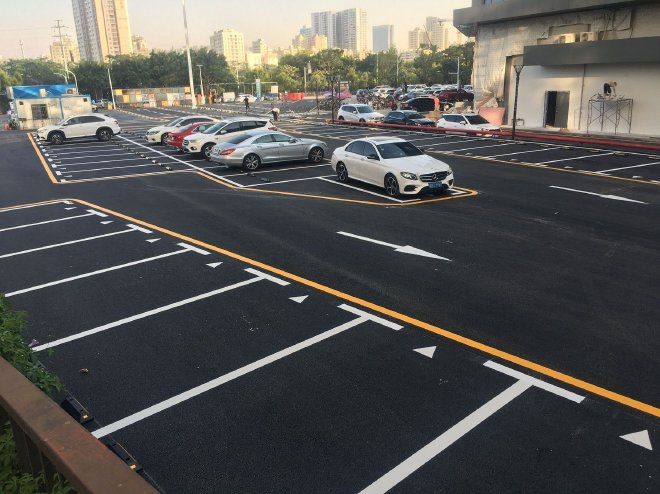
周末,深圳南山区蓝女士和朋友去海雅商场吃饭,路程十几分钟,结果在商场找车位却花了半个多小时。“这种情况在周六日和一些景区是常态,甚至有时候还找不到停车位。”蓝女士说。
城市空间有限、机动车数量不断增长,停车成为难题。高德地图2022年初的报告显示,全国停车位缺口达到8000万个。而在不久前,广西南宁“天价停车费”一事更是将停车贵推上风口浪尖。
停车难似乎成了困扰人们的城市顽疾,如何才能破解?
车位供需不平衡,是停车难问题的根本原因。
近几年,我国汽车保有量快速增长。根据公安部数据,2000年我国汽车保有量仅为0.16亿辆;而到了2014年,这一数字突破1亿;截至2022年底,我国保有量达3.19亿辆,并且预计每年以2000万辆的速度在快速增长。
但停车位数量却赶不上汽车的增长速度。一般而言,城市车位数要在汽车保有量1.1倍以上才能正常运转,而当前中国城市汽车保有量和停车位数量比率大约为 1:0.8,中小城市仅为 1:0.5。
北京交通大学建筑与艺术学院副教授卢源表示,停车位供给不足原因,一方面是“历史欠账”,另一方面是大城市土地稀缺,导致停车设施增设受限。
“历史欠账”是指老旧小区在规划时没有考虑到未来的汽车增长。以北京为例,1994年之前,北京市居住停车无配建车位指标要求,1994-2003年间居住区配建车位指标仅为0.1个/户,2003-2015年间配建指标为0.3-0.5个/户,2015年后提高至0.3-1.3个/户,但目前北京户均机动车保有量已达到0.7个/户。
历史规划问题也导致停车难的问题在老旧小区与胡同区最突出。
“小区停车位太少了,晚上稍微晚点下班就停不进来了。”北京西城区的王女士告诉界面新闻。王女士所住的小区是北京西城区的老旧小区,由于小区建设较早,停车配建标准低,车位供给严重不足。小区内平常根本没有空余车位,小区外路侧也禁止停放,附近也没有合适的停车场,停车矛盾突出。
因为停车位数量少,王女士和小区其他住户默认先到先得原则。每天为了占停车位,一下班王女士便从单位往家赶,停上车后也不敢轻易外出,晚上有外出需要一般都打车。
王女士还表示,很多住户们“见缝插针”停车把道路堵塞,不仅要经常打电话叫人下来挪车,而且因为停得近容易出现剐蹭。
除了客观存在的停车位数量缺口,停车位资源利用不充分也是停车难的一大原因。据高德地图发布的报告显示,中心区、景区和医院周边,是全国“停车难”的主要区域。白天这些地方“一位难寻”,但是到了晚上又变得空荡荡。
根据高德地图与清华大学交通研究所联合发布的《全国停车场分析报告》,停车难的城市与停车成本高的城市有很高的重合率。报告根据各大城市重点区域路边停车场平均价格分析,广州以每小时26元的停车价格位居首位,其次分别为上海20元、深圳20元、南京20元、杭州12元。
不同的停车设施收费水平不一,其中住宅小区停车收费较便宜,一般按月或年为的单位进行收费,费用在每月几百至千元不等。
商用的写字楼、商场、机场配套的停车场收费相对较贵,每小时费用在几元至十几元不等。浙江合创律师事务所俞建伟律师向界面新闻表示,一方面是因为商用停车场一般为地下停车场,开发商建设成本高;另一方面,公交车站、机场等配套停车场资源有限,有意通过较高的停车费用限制人们长时间停放。
而作为便捷的临时停车资源,路侧停车费用更高。今年5月,南宁路侧停车一天收费上百元引发热议。在南宁停车位管理公司慧泊停车2021年发布的一批停车欠费车辆名单中,甚至有车辆停车欠费高达6万多元。
在学者们看来,停车费用高是大城市用市场化手段治理城市拥堵的重要手段之一,政府希望通过停车贵让公众在中心城区等地方减少汽车使用,多选择公共交通。
卢源表示,路侧停车并非是简单的画线无成本,实际上占用的道路资源成本很高,而路侧停车资源有限,收费可以有效达到资源配置效果。同时开车本身不是低成本的出行方式,由政府补贴的公共交通才是低成本出行。
长安大学运输工程学院教授陈红也表示,收费是一种利用经济杠杆的调控手段,通过价格影响人们出行工具的选择。如果路侧停车位周转率低,大家享受到的资源利用率也会降低,同时还会造成道路交通拥堵。
提高停车费对于缓解拥堵有一定的效果。据卢源介绍,业内有研究选取了全国大约二十多个城市,就收费和城市拥堵情况做了比较分析,发现停车收费确实有效。陈红表示,西安朱雀路一带在实行路侧停车收费前,路两侧都停满车辆,其他车辆无法停放;实行6元一小时收费之后,停放车辆变少,停车位周转率大幅提升。
但公众并不太接受这样高的停车费,对价格制定依据也产生质疑。陈红表示,目前路侧停车价格主要是分区域设定,停车价格需要慎重考虑整个区域交通拥堵、停车位数量等多重因素。同时也需要详细调研、广泛听取居民意见,设定一个既能被人们接受同时能达到有效管理的价格。
目前,南宁市政府就停车费标准已拟定优化调整方案,一天最高102元的费用将降至50元。此外,苏州、广州、常州等多地启动以停车场收费秩序、明码标价等为重点的专项整治。
政府部门早已关注到停车难题。2021年5月,国家发改委印发《关于推动城市停车设施发展的意见》,要求到2025年,全国大中小城市的居住社区、医院、学校、交通枢纽等重点区域停车需求基本得到满足。
随后,各个城市纷纷推出相应解决方案。去年,苏州、厦门、广州等均发布了停车意见通知;今年4月,浙江省也印发《关于浙江省推动城市停车设施高质量发展的实施意见》,明确到2025年,力争全省建成停车位1120万个。
解决停车难题主要在于两方面——增加停车位、提高利用率。
将现有道路划设成路侧停车位是增加车位的主要方式之一,基本不需再投入额外成本,但一定程度上可能会造成交通拥堵情况。另外,建设立体车库能在有限空间里提供更多车位,但建设成本较高。
山东莱钢泰达车库有限公司董事长兼CEO金慧娟告诉界面新闻,新建一个立体停车库造价在几万到几十万不等。卢源也表示,一般立体停车库项目造价高,收回成本需要5至10年。
为盘活城市已有停车资源,提高停车资源利用率,共享停车在越来越多城市推行。今年5月26日,北京发布的《2023年北京市交通综合治理行动计划》提到,今年北京将新增共享停车场150处、车位1万个。
陈红表示,共享停车更适合对于可以有效管理的商业的写字楼、酒店、医院等,在小区实施难度较大。小区停车位产权属于业主个人,物业无法支配,如果居民个人不愿意共享,其他车辆就无法停放。
一些城市还在建设城市智慧停车平台。金慧娟透露,目前已经和南京达成协议,今年内将建设城市级停车管理平台,未来将构建城市停车资源一张网。
此外,为解决中心城区交通拥堵和停车问题,多个城市发展“P+R”停车模式。P+R是指在地铁附近建造停车场,开车只到地铁站,再换乘公共交通到目的地。以北京为例,大部分P+R停车场都在五环外,车主凭借当天乘坐地铁或公交的记录,刷一卡通停一次车只需2元左右。卢源认为,P+R停车场让一部分人开始接受“汽车+地铁”的混合交通方式,可以部分缓解中心城区的交通拥堵情况。
停车难是城市治理的重要一环,卢源认为,不能只是头痛医头、脚痛医脚,还要跳出停车位供需关系,引导人们向公共交通转移,同时也要提高公共交通的服务水平
What should I do if parking is expensive or difficult?
What should we do if there is a shortage of 80 million parking spaces nationwide, and parking is expensive or difficult?
On the weekend, Ms. Lan and her friends from Nanshan District, Shenzhen went to Haiya Shopping Mall for a meal. It took more than ten minutes to find a parking spot in the mall, but it took over half an hour. This situation is normal on Saturdays and Sundays in some scenic spots, and sometimes even parking spaces cannot be found, "Ms. Lan said.
Urban space is limited, and the number of motor vehicles is constantly increasing, making parking a challenge. According to a report by Gaode Map in early 2022, the gap in parking spaces nationwide reached 80 million. Not long ago, the issue of "skyrocketing parking fees" in Nanning, Guangxi pushed the cost of parking to the forefront.
The difficulty of parking seems to have become a persistent urban problem that troubles people. How can we solve it?
The imbalance between supply and demand of parking spaces is the fundamental reason for the difficulty of parking.
In recent years, the number of cars in China has grown rapidly. According to data from the Ministry of Public Security, the number of cars owned in China in 2000 was only 16 million; In 2014, this number exceeded 100 million; As of the end of 2022, China's ownership reached 319 million vehicles, and it is expected to grow rapidly at a rate of 20 million vehicles per year.
But the number of parking spaces cannot keep up with the growth rate of cars. Generally speaking, the number of urban parking spaces needs to be 1.1 times or more of the total number of cars in order to operate normally. However, the current ratio of car ownership to parking spaces in Chinese cities is approximately 1:0.8, while in small and medium-sized cities it is only 1:0.5.
Lu Yuan, associate professor of the School of Architecture and Arts of Beijing Jiaotong University, said that the insufficient supply of parking spaces was due to "historical debt" on the one hand, and the scarcity of land in large cities on the other hand, which led to the limited addition of parking facilities.
The term 'historical debt' refers to the lack of consideration for future car growth in the planning of old residential areas. Taking Beijing as an example, before 1994, there was no requirement for the allocation of parking spaces in residential areas in Beijing. From 1994 to 2003, the allocation of parking spaces in residential areas was only 0.1 per household. From 2003 to 2015, the allocation of parking spaces was 0.3 to 0.5 per household, and after 2015, it increased to 0.3 to 1.3 per household. However, currently, the average number of motor vehicles per household in Beijing has reached 0.7.
Historical planning issues have also led to the most prominent issue of parking difficulties in old residential areas and hutong areas.
"There are too few parking spaces in the community, so I can't park in after work a little late at night," Ms. Wang from Xicheng District, Beijing, told InterfaceNews. The community where Ms. Wang lives is an old community in Xicheng District of Beijing. Due to the early construction of the community, the parking standard is low, and the parking space supply is seriously insufficient. There are usually no spare parking spaces in the community, and parking is also prohibited on the roadside outside the community. There is also no suitable parking lot nearby, resulting in prominent parking conflicts.
Due to the limited number of parking spaces, Ms. Wang and other residents in the community default to the principle of first come, first served. Every day, in order to occupy a parking space, Ms. Wang rushes home from her workplace. She also dares not go out easily after parking, and usually takes a taxi when going out at night.
Ms. Wang also stated that many residents stop at the right moment and block the road. They not only need to make frequent phone calls to ask people to come down and move their cars, but also because parking close is prone to scratches.
In addition to the objective gap in the number of parking spaces, insufficient utilization of parking space resources is also a major reason for parking difficulties. According to a report released by Gaode Map, the central area, scenic spots, and the surrounding areas of hospitals are the main areas in the country where parking is difficult. During the day, these places are difficult to find, but at night they become empty again.
According to the "National Parking Lot Analysis Report" jointly released by Gaode Map and the Transportation Research Institute of Tsinghua University, there is a high overlap rate between cities with difficult parking and cities with high parking costs. According to the analysis of the average price of roadside parking lots in key areas of major cities, Guangzhou ranks first with a parking price of 26 yuan per hour, followed by Shanghai at 20 yuan, Shenzhen at 20 yuan, Nanjing at 20 yuan, and Hangzhou at 12 yuan.
The charging levels for different parking facilities vary, with residential areas charging relatively cheap parking fees, usually on a monthly or annual basis, ranging from a few hundred to a thousand yuan per month.
Commercial office buildings, shopping malls, and airport parking lots are relatively expensive, with hourly fees ranging from a few to more than ten yuan. Lawyer Yu Jianwei from Zhejiang Hechuang Law Firm told Interface News that on the one hand, it is because commercial parking lots are generally underground parking lots, and developers have high construction costs; On the other hand, the resources of supporting parking lots such as bus stops and airports are limited, and people are intentionally restricted from long-term parking through higher parking fees.
As a convenient temporary parking resource, roadside parking costs are higher. In May this year, the daily fee for parking on the roadside of Nanning was over a hundred yuan, which sparked heated discussions. In the list of vehicles with unpaid parking fees released by Nanning Parking Management Company Huibo Parking in 2021, there are even vehicles with unpaid parking fees of over 60000 yuan.
In the view of scholars, high parking costs are one of the important means for big cities to use market-oriented methods to control urban congestion. The government hopes to reduce car use and choose more public transportation in central urban areas and other places through the high cost of parking.
Lu Yuan stated that roadside parking is not just about drawing lines without costs. In fact, the cost of occupying road resources is high, and roadside parking resources are limited. Charging can effectively achieve resource allocation effects. At the same time, driving itself is not a low-cost mode of transportation, and public transportation subsidized by the government is the low-cost mode of transportation.
Chen Hong, a professor at the School of Transportation Engineering of Chang'an University, also said that charging is a kind of regulation means that uses economic leverage to affect people's choice of travel tools through price. If the turnover rate of roadside parking spaces is low, the resource utilization rate enjoyed by everyone will also decrease, and it will also cause road traffic congestion.
Raising parking fees has a certain effect on alleviating congestion. According to Lu Yuan, research in the industry has selected more than 20 cities across the country to compare and analyze fees and urban congestion, and found that parking fees are indeed effective. Chen Hong stated that before implementing roadside parking fees in the Zhuque Road area of Xi'an, vehicles were parked on both sides of the road, and other vehicles could not park; After implementing a 6-yuan hourly fee, there have been fewer parked vehicles and a significant increase in the turnover rate of parking spaces.
But the public is not very receptive to such high parking fees, and there are also doubts about the basis for pricing. Chen Hong stated that currently, roadside parking prices are mainly set by regions, and parking prices need to carefully consider multiple factors such as traffic congestion and parking space in the entire region. At the same time, it is also necessary to conduct detailed research, widely listen to residents' opinions, and set a price that can be accepted by people while achieving effective management.
At present, the Nanning Municipal Government has formulated an optimization and adjustment plan for the parking fee standard, and the maximum daily fee of 102 yuan will be reduced to 50 yuan. In addition, multiple cities such as Suzhou, Guangzhou, and Changzhou have launched special rectification measures focusing on the order of parking lot fees and clear pricing.
The government has long been concerned about the parking problem. In May 2021, the National Development and Reform Commission issued the Opinions on Promoting the Development of Urban Parking Facilities, which requires that by 2025, the parking needs of residential communities, hospitals, schools, transportation hubs and other key areas in large, medium and small cities across the country will be basically met.
Subsequently, various cities launched corresponding solutions one after another. Last year, Suzhou, Xiamen, Guangzhou, and others all issued parking advice notices; In April of this year, Zhejiang Province also issued the "Implementation Opinions on Promoting the High Quality Development of Urban Parking Facilities in Zhejiang Province", clarifying that by 2025, the province aims to build 11.2 million parking spaces.
The main solution to the parking problem lies in two aspects - increasing parking spaces and improving utilization.
Dividing existing roads into roadside parking spaces is one of the main ways to increase parking space, which basically does not require additional costs, but may to some extent cause traffic congestion. In addition, building a three-dimensional garage can provide more parking spaces in limited space, but the construction cost is relatively high.
Jin Huijuan, Chairman and CEO of Shandong Laigang Teda Garage Co., Ltd., told Interface News that the cost of building a new three-dimensional parking garage ranges from tens of thousands to hundreds of thousands. Lu Yuan also stated that the cost of general three-dimensional parking garage projects is high, and it takes 5 to 10 years to recover the cost.
In order to revitalize the existing parking resources in cities and improve the utilization rate of parking resources, shared parking is being implemented in more and more cities. On May 26 this year, Transport in Beijing issued the Action Plan for Comprehensive Traffic Management in Beijing in 2023, which mentioned that 150 shared parking lots and 10000 parking spaces will be added this year.
Chen Hong stated that shared parking is more suitable for commercial office buildings, hotels, hospitals, etc. that can be effectively managed, and it is more difficult to implement in residential areas. The property rights of parking spaces in residential areas belong to individual owners, and the property cannot be controlled. If individual residents are unwilling to share, other vehicles cannot be parked.
Some cities are still building urban smart parking platforms. Jin Huijuan revealed that an agreement has been reached with Nanjing to build a city level parking management platform within this year, and to build a network of urban parking resources in the future.
In addition, to address traffic congestion and parking issues in the central urban area, multiple cities have developed the "P+R" parking mode. P+R refers to building a parking lot near the subway, driving only to the subway station, and then transferring to public transportation to the destination. Taking Beijing as an example, most P+R parking lots are located outside the Fifth Ring Road. With a record of taking the subway or bus on the same day, car owners can use an all-in-one card to park a car for only about 2 yuan. Lu Yuan believes that the P+R parking lot can partially alleviate traffic congestion in the central urban area by allowing some people to accept the mixed mode of "car+subway" transportation.
Difficulty in parking is an important part of urban governance. Lu Yuan believes that it is not just about getting headaches and foot pain, but also about breaking away from the supply and demand relationship of parking spaces, guiding people to shift towards public transportation, and improving the service level of public transportation.